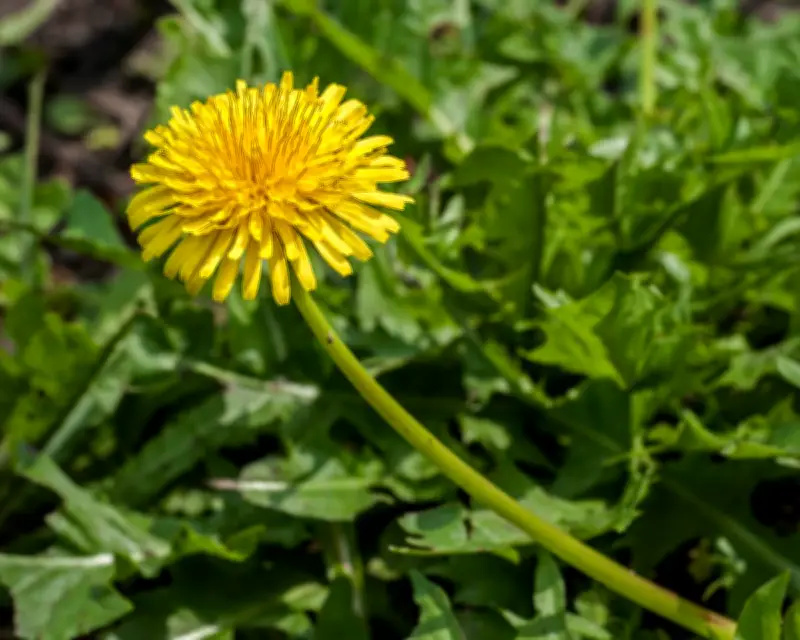
The Russian Dandelion: A Surprising Solution to the Global Rubber Shortage
As the world faces a looming shortage of natural rubber, scientists are turning to an unlikely source: the Russian dandelion. This hardy plant, known scientifically as Taraxacum kok-saghyz, produces a high-quality latex in its roots that could be used to make tires, gloves, and other essential products.
Natural rubber is a critical material for modern life, used in everything from medical gloves to aircraft tires. However, the global supply is under threat due to climate change, disease, and deforestation in Southeast Asia, where most rubber is grown. The Russian dandelion, which thrives in temperate climates, could offer a sustainable and resilient alternative.
How Does It Work?
The Russian dandelion, also called the rubber root dandelion, contains latex in its roots. By extracting and processing this latex, manufacturers can produce natural rubber that is virtually identical to that from the traditional rubber tree. Researchers have been working to optimize cultivation and extraction methods to make it commercially viable.

One of the key advantages of the Russian dandelion is its ability to grow in diverse environments. Unlike rubber trees, which require tropical conditions, this dandelion can be cultivated in Europe, North America, and other temperate regions. This could reduce the carbon footprint of rubber production and provide economic opportunities for farmers in these areas.
Challenges and Progress
Despite its potential, there are challenges to overcome. The yield of latex from dandelions is currently lower than that from rubber trees, and extraction processes need to be scaled up. However, advances in plant breeding and biotechnology are improving yields. Companies and research institutions are investing in this technology, with pilot projects already underway.
For example, the Fraunhofer Institute in Germany has developed a method to extract latex efficiently, and the European Union is funding research to bring dandelion rubber to market. In the United States, the Department of Agriculture is also exploring its potential.
Environmental and Economic Benefits
Adopting dandelion rubber could have significant environmental benefits. It would reduce pressure on tropical forests and decrease the use of synthetic rubber, which is derived from petroleum. Additionally, it could create a new agricultural sector in temperate regions, boosting rural economies.
Experts estimate that dandelion rubber could meet up to 10% of global demand within a decade, with the potential to grow further. While it won't replace traditional rubber entirely, it could provide a crucial buffer against supply disruptions.
The Russian dandelion is not just a weed; it might be a key part of the solution to one of the world's most pressing material shortages. As research continues, this humble plant could transform the rubber industry and help build a more sustainable future.