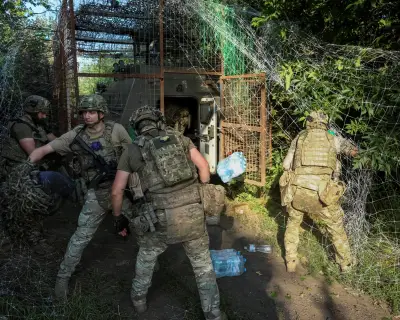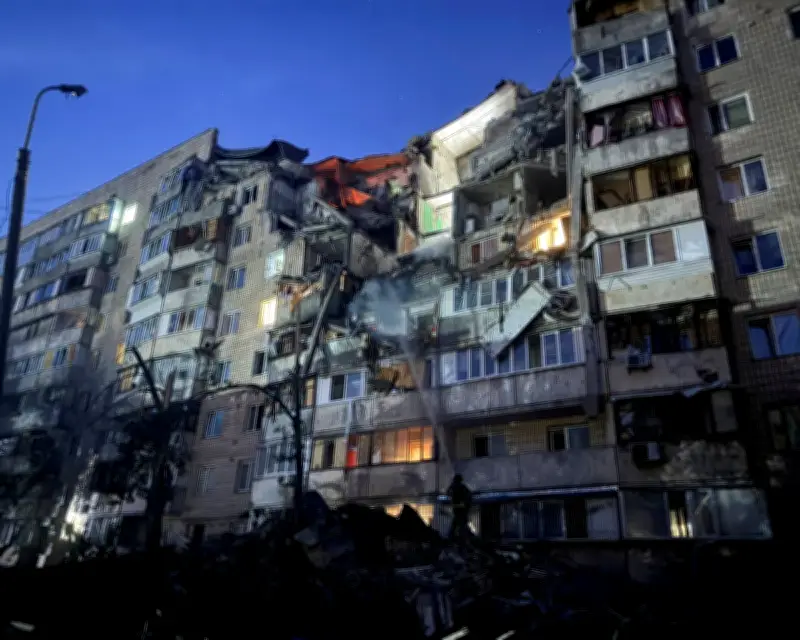
Russia launched a series of missile and drone attacks on Kyiv early Monday, killing at least five people and wounding dozens more, according to Ukrainian officials. The attacks targeted critical infrastructure and residential areas in the capital, causing widespread damage and panic among residents.
Details of the Attack
Ukrainian air defense systems intercepted several missiles and drones, but some managed to hit their targets. The strikes damaged power lines and water pipes, leaving parts of the city without electricity and water supply. Emergency services were deployed to the affected areas to rescue survivors and extinguish fires.
According to Kyiv's mayor, Vitali Klitschko, the attacks began around 4 a.m. local time and lasted for several hours. At least five people were confirmed dead, and more than 30 were injured, including three children. The injured were taken to nearby hospitals, where some are in critical condition.

Impact on Infrastructure
The attacks caused significant damage to the city's energy infrastructure. Ukraine's state energy company, Ukrenergo, reported that several substations were hit, leading to power outages in parts of Kyiv and the surrounding region. Engineers are working to restore power as quickly as possible.
In addition to the power outages, water supply was disrupted in some districts. Residents were advised to boil water before use until further notice. The city administration has set up emergency water distribution points.
International Response
The international community condemned the attacks. The United Nations Secretary-General called for an immediate de-escalation and urged both sides to return to diplomatic negotiations. The European Union's foreign policy chief said the attacks were a clear violation of international humanitarian law and vowed to increase support for Ukraine.
Ukrainian President Volodymyr Zelenskyy vowed to retaliate, stating that Ukraine would not be intimidated by such acts of terror. He also called on Western allies to provide more advanced air defense systems to protect Ukrainian cities from future attacks.
Civilian Casualties and Rescue Efforts
Rescue teams worked through the morning to search for survivors under the rubble of destroyed buildings. At least two residential buildings were hit, causing partial collapses. Dozens of residents were evacuated from the affected areas and taken to temporary shelters.
Local hospitals reported that they were overwhelmed with the influx of injured civilians. Medical staff worked tirelessly to treat the wounded, many of whom suffered shrapnel injuries and burns. The health ministry appealed for blood donations to replenish supplies.
Context of the Conflict
The attacks come amid intensified hostilities in eastern Ukraine, where Russian forces have been making gradual advances. Kyiv has been a frequent target of Russian missile and drone strikes since the start of the full-scale invasion in February 2022. The city has fortified its air defenses over the years, but periodic attacks still cause casualties and damage.
Analysts suggest that the latest assault may be part of a broader Russian strategy to weaken Ukraine's energy grid ahead of winter, similar to previous campaigns. Ukraine has been preparing for such scenarios by stockpiling generators and repairing damaged infrastructure.
Reactions from Residents
Residents of Kyiv expressed fear and frustration over the renewed attacks. Many have grown accustomed to the threat of strikes but say the constant danger takes a toll on their mental health. Some families have chosen to leave the city again, seeking safety in western regions of the country.
One resident, Olena, a 34-year-old teacher, told reporters, 'We woke up to the sound of explosions. It's terrifying. We never know if the next one will hit our building.' Another resident, Andriy, said, 'We are tired of this war. We just want it to end.'
Military Analysis
Military experts noted that the attack involved a combination of cruise missiles and Iranian-made Shahed drones, a tactic Russia has employed frequently. The drones are relatively cheap and difficult to intercept, making them a persistent threat. Ukraine has been requesting more advanced air defense systems, such as Patriot batteries, to counter these threats effectively.

According to the Ukrainian Air Force, they managed to shoot down 15 out of 20 drones and 8 out of 12 missiles. However, the ones that got through caused significant damage. The air force also reported that Russian aircraft launched the missiles from within Russian territory, making it difficult to target the launch sites.