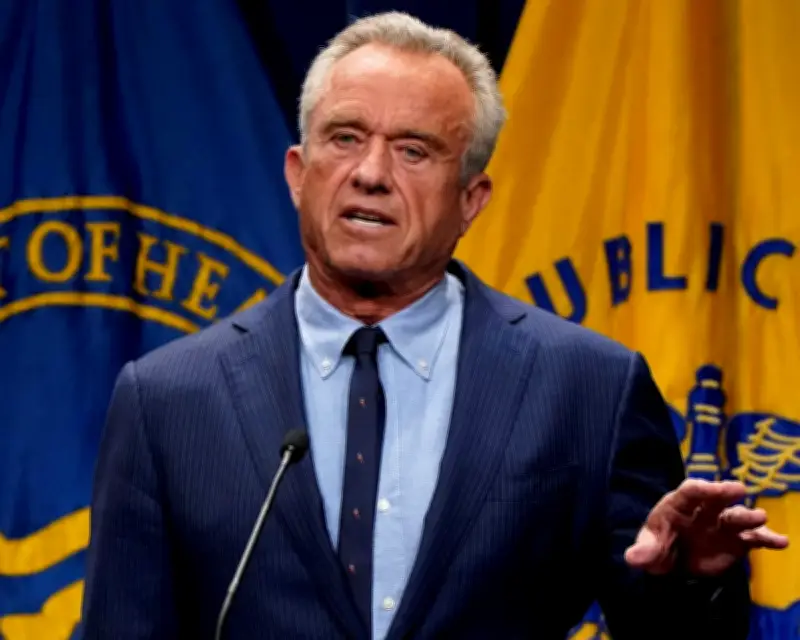
Health law experts have decried the Trump administration's use of 'authoritarian' and 'unconstitutional' quarantine measures for at least one individual who came into contact with a hantavirus patient. The mandatory quarantine, imposed without scientific evidence, sets a concerning precedent for how the US might handle future outbreaks of Ebola and other pathogens.
Expert Criticism
Lawrence Gostin, a health law professor at Georgetown University, described the detention as 'arbitrary, capricious, and unjust,' noting there is no crime or significant public risk involved. James Hodge, a professor at Arizona State University's Sandra Day O'Connor College of Law, warned that health officials should never use unconstitutional or unproven techniques to control infectious diseases.
The Case
Angela Perryman, a passenger on the MV Hondius cruise ship, came into contact with a fellow passenger infected with Andes virus, a type of hantavirus. She appealed a federal order to quarantine in a North Dakota facility, requesting instead to self-quarantine in Florida. The CDC initially asked states to provide in-person symptom checks and round-the-clock guards, an unusual step for a pathogen rarely transmitted between people.

While some states complied and 10 other passengers were allowed to self-quarantine, Florida refused. CDC Deputy Director Michael Bell concluded that Perryman could safely quarantine at home with remote monitoring. However, on 15 June, HHS Secretary Robert F Kennedy Jr overruled that decision, citing no scientific rationale.
Unprecedented Action
Hodge called Kennedy's decision 'unprecedented' and a 'very bad precedent' for how Americans might be treated if exposed to infectious diseases. HHS spokesperson Courtney Spencer defended the move, stating it was necessary for Perryman's and the community's wellbeing in the absence of proper home monitoring by state authorities.
Experts note that public health officials are required to use the least restrictive options. Hodge emphasized that when multiple effective options exist, the one less restrictive on civil liberties should be chosen. The situation is 'highly atypical' for the CDC, which usually relies on state and local officials for quarantine measures.
Constitutional Concerns
Both Gostin and Hodge, who helped draft the CDC's 2017 quarantine rules, opposed allowing the HHS secretary to overturn medical reviews. Gostin called the move 'unconstitutional' and highlighted the lack of accountability, noting that Kennedy is reviewing his own order without evidence or reasons. 'A person's liberty should not hinge on a political calculation,' he said.
Hodge stressed that scientific justification is a constitutional requirement for quarantine orders. Heavy-handed measures, he warned, could lead to underreporting and evasion, making outbreaks harder to control. He also pointed out the hypocrisy of Kennedy and other officials who criticized Covid lockdowns but now impose coercive measures.
'The whole raison d'etre of Secretary Kennedy's tenure has been based upon medical freedom,' Gostin said, 'yet here they're issuing a compulsory deprivation of liberty.'