A record-breaking clinical trial for Ebola treatments in the Democratic Republic of the Congo has reported a stunning 90% survival rate among patients who received early care, marking a major breakthrough in the fight against the virus.
Unprecedented Results from the PALM Trial
The trial, known as PALM (which stands for 'Pamoja Tulinde Maisha,' Swahili for 'Together Save Lives'), tested four experimental drugs on patients in eastern DRC. The results, published in the New England Journal of Medicine, showed that two of the drugs—REGN-EB3 and mAb114—were particularly effective, reducing mortality to as low as 6% in patients with low viral loads who sought treatment early.
Overall, the survival rate across all patients was 90% for those treated early with these two drugs, compared to a historical fatality rate of around 67% in the region. Dr. Jean-Jacques Muyembe, director of the DRC's National Institute for Biomedical Research and a co-author of the study, described the outcome as 'a historic achievement' that could transform the way Ebola is managed globally.

Details of the Trial Design
The PALM trial enrolled 681 patients between November 2018 and August 2019 across four treatment centers in the cities of Beni, Butembo, Katwa, and Mangina. Patients were randomly assigned to receive one of four drugs: REGN-EB3 (a cocktail of three monoclonal antibodies), mAb114 (a single monoclonal antibody), ZMapp (a previous standard of care), or remdesivir (an antiviral).
The trial was halted early in August 2019 after an interim analysis showed that patients receiving REGN-EB3 or mAb114 had significantly better outcomes. Among those given REGN-EB3, mortality was 29% overall, while for mAb114 it was 34%. In contrast, ZMapp and remdesivir had mortality rates of 49% and 53%, respectively. For patients with low viral loads, the mortality rate dropped to just 6% for REGN-EB3 and 11% for mAb114.
Impact on the Ongoing Outbreak
The DRC has been battling its tenth Ebola outbreak since August 2018, which has claimed over 2,200 lives. The trial's success has already changed the response: health authorities have adopted REGN-EB3 and mAb114 as the standard treatments in the outbreak zone. Dr. Anthony Fauci, director of the U.S. National Institute of Allergy and Infectious Diseases, which co-funded the trial, called the results 'a very good day for public health' and emphasized that the drugs could be stockpiled for future outbreaks.
The World Health Organization has also endorsed the findings, stating that the drugs should be made available in all Ebola-affected areas. Dr. Michael Ryan, executive director of the WHO's Health Emergencies Programme, noted that the trial 'demonstrates the power of rigorous clinical research conducted in the midst of a complex humanitarian emergency.'
Challenges and Next Steps
Despite the breakthrough, challenges remain. The drugs must be kept at very cold temperatures and administered intravenously, which can be difficult in remote areas with limited infrastructure. Researchers are now working on formulations that could be easier to store and deliver, such as freeze-dried versions that can be reconstituted.
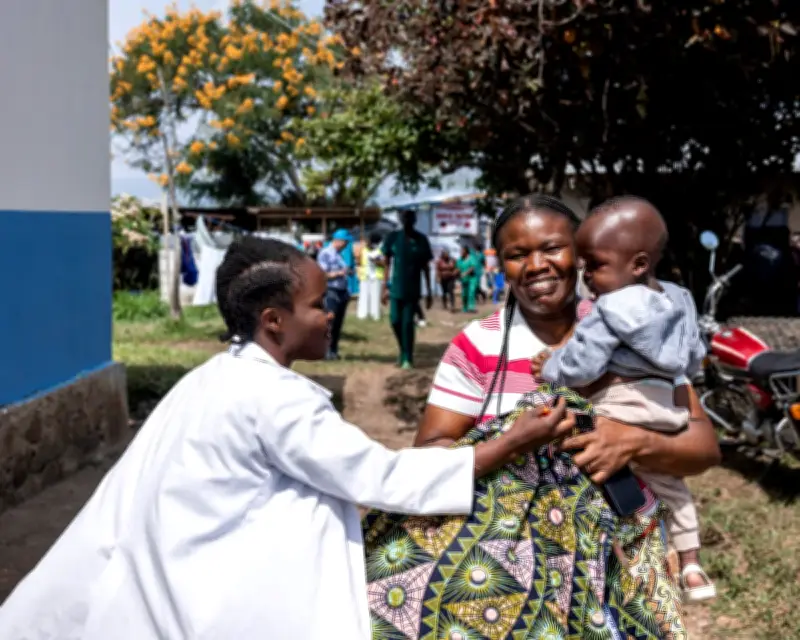
Additionally, the trial's success underscores the importance of early detection and treatment. Many patients in the DRC outbreak delayed seeking care due to mistrust of health workers or fear of stigmatization. Community engagement and education will be critical to ensuring that future patients benefit from these life-saving therapies.
The PALM trial has been hailed as a model for conducting clinical research during outbreaks. Dr. Muyembe said, 'We have shown that even in the most difficult circumstances, we can find solutions that save lives.' The results offer a glimmer of hope that Ebola, once a near-certain death sentence, can now be treated effectively.