The Pacific region is grappling with a severe fuel crisis that has prompted emergency conservation measures in the Marshall Islands and Tuvalu, warnings of electricity rationing in Fiji, and potential school closures in Samoa. The crisis, exacerbated by global fuel shocks and the Iran conflict, has exposed the vulnerability of island nations that rely heavily on imported fossil fuels.
Emergency Measures Across the Pacific
Authorities in the Marshall Islands and Tuvalu have announced emergency measures to conserve fuel, while Fiji's main energy provider has warned that electricity rationing is now a possibility. The Samoan government is considering school closures to save fuel. These steps underscore the severity of the crisis, which has hit the Pacific particularly hard due to its dependence on expensive imports. Some nations spend up to 25% of their GDP on securing fuel, even before this year's price spikes.
Collective Response via Biketawa Declaration
In May, Pacific leaders took a rare collective step by invoking the Biketawa Declaration by consensus, uniting governments in their response to the ongoing fuel crisis. The declaration, formalized in 2000 at Biketawa Islet in Kiribati, was originally designed to address major regional challenges such as conflict. It previously enabled the Regional Assistance Mission to Solomon Islands (2003–17) and the Pacific Regional Assistance Mission to Nauru (2006–09). More recently, it facilitated a regional response to the COVID-19 pandemic, allowing transport of vaccines and medical equipment. Pacific Islands Forum Secretary General Baron Waqa warned that the region is "highly exposed to external shocks" and that the fuel crisis is "beginning to intersect across Pacific economies, with direct implications on essential services, connectivity, economic resilience and the livelihoods of our people."

Unequal Impact on Island Nations
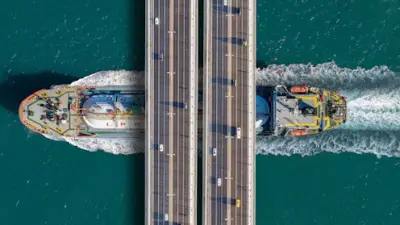
The fuel crisis poses a greater challenge to Pacific Island countries than many other nations. Almost all fuel is imported from a handful of East Asian countries, which rely heavily on oil from the Middle East—80% of crude oil processed in refineries was transported via the Strait of Hormuz. The full impact of the Iran war has not yet been felt, as tankers in transit before the Hormuz closure have continued deliveries, and donor support from Australia has helped some countries manage what has so far been mostly a price shock. Nations like Fiji had healthy fuel reserves before the crisis, but others had very little buffer: about a month's supply for Tonga, Cook Islands, and Tuvalu, and even less for Kiribati. Maintaining fuel storage facilities in difficult environmental conditions remains an ongoing challenge.
Uncertain Future and Potential Solutions
The Iran peace deal, if it holds, may allow more oil products to flow, but damage to energy infrastructure will take time to repair, and insurance premiums and food prices may stay high. Pacific foreign ministers have left open the possibility of more direct measures, such as joint fuel purchases, if political and practical challenges can be overcome. Australia has indicated its priority is to monitor the situation and engage with Pacific partners, calling for continued attention to the region's unique energy security needs in a recent round of "fuel diplomacy" in Asian markets.
Balancing Immediate Crisis with Long-Term Goals
Difficult choices lie ahead. Access to affordable, reliable energy is a sustainable development goal, and Pacific communities deserve no less. Before the crisis, many leaders were focused on reducing fossil fuel imports and boosting energy self-reliance through renewables, with the goal of becoming the first region to run on 100% renewables. Pacific energy ministers recently reaffirmed this goal and agreed to accelerate the rollout. The world's continued reliance on fossil fuels created the conditions for both the fuel crisis and climate change. Only reducing that reliance will solve them.