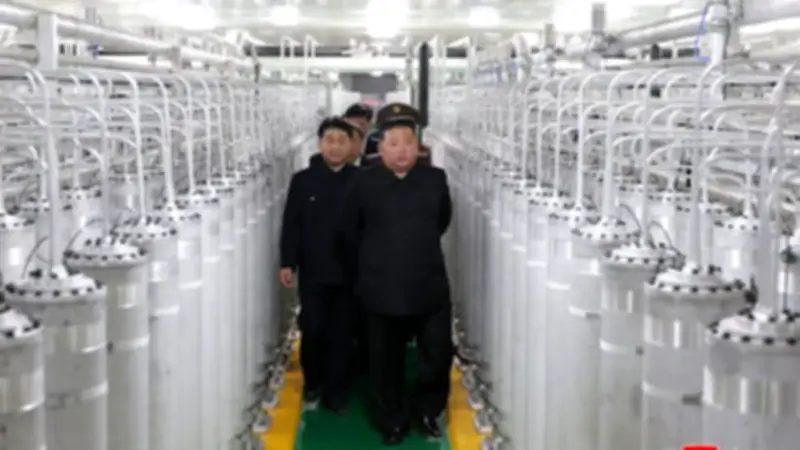
International efforts to end North Korea's nuclear weapons program have failed, according to a new survey of over 70 international experts. The experts assessed only a 3% probability that North Korea will give up its nuclear weapons by 2035. This stark assessment comes after decades of diplomatic negotiations and economic sanctions aimed at denuclearisation.
Shift in Chinese Policy
The recent summit between Chinese President Xi Jinping and North Korean leader Kim Jong Un in Pyongyang marked a significant shift. Chinese readouts of the summit conspicuously omitted any mention of denuclearisation, signalling Beijing's departure from a long-standing policy goal. This is the latest setback for international efforts to denuclearise North Korea.
Why Denuclearisation Efforts Failed
North Korea began pursuing nuclear weapons in the 1990s, driven by insecurity after the collapse of the Soviet Union and the unresolved status of the Korean War, which ended without a peace treaty. Initial diplomatic efforts broke down due to North Korean cheating on interim agreements and provocations, including withdrawal from the Nuclear Non-Proliferation Treaty and nuclear and missile tests.

International efforts then shifted to economic sanctions, with Russia and China initially supporting UN sanctions. However, by the late 2010s, Russia and China withdrew support, using their Security Council vetoes to block new sanctions and providing economic lifelines through lax enforcement. Russia even state-sponsored sanctions violations to procure North Korean arms for its war in Ukraine.
Sanctions Regime Compromised
The US imposed autonomous sanctions to maintain pressure, but these were also neutered. The US avoided politically difficult sanctions on Chinese entities and scaled back new designations to facilitate diplomatic outreach under the first Trump administration. North Korea exploited these gaps through a sophisticated network of sanctions evaders, using its merchant fleet, diplomatic corps, overseas workers, and state-sponsored hackers to move cash, crypto, and commodities.
The compromised sanctions regime never pushed North Korea to the brink of economic ruin. Pyongyang now possesses a diversified missile arsenal capable of reaching the continental United States and an estimated 60 nuclear warheads with scalable production capability.
What Comes Next
According to experts, economic sanctions will never be strong enough to denuclearise North Korea. Unconditional engagement is not viable, as the Kim regime has staked too much legitimacy on its nuclear enterprise. The international interventions that toppled Libyan and Iranian leaders likely reinforced Pyongyang's perception that nuclear deterrents are crucial.
The only realistic path now runs through radical political reform, meaning regime change or reunification with the South. One expert told the survey: "The only scenario I can imagine in which there are no North Korean nuclear weapons is a world in which there is no North Korea."
International stakeholders have few good options to drive this; such demand must come from within. The focus should now be on buying time while the regime's vulnerabilities on succession, elite cohesion, and ideology fester. Regional states should continue to support economic sanctions to slow North Korea's nuclear and missile development, including multilateral enforcement against ship-to-ship transfers of sanctioned goods and remote IT work.
Regional states should publicly maintain a policy of denuclearisation to deny Pyongyang the propaganda coup of international tolerance. They should also pursue counterforce options, particularly ballistic missile defence, to reduce exposure to North Korean nuclear threats.