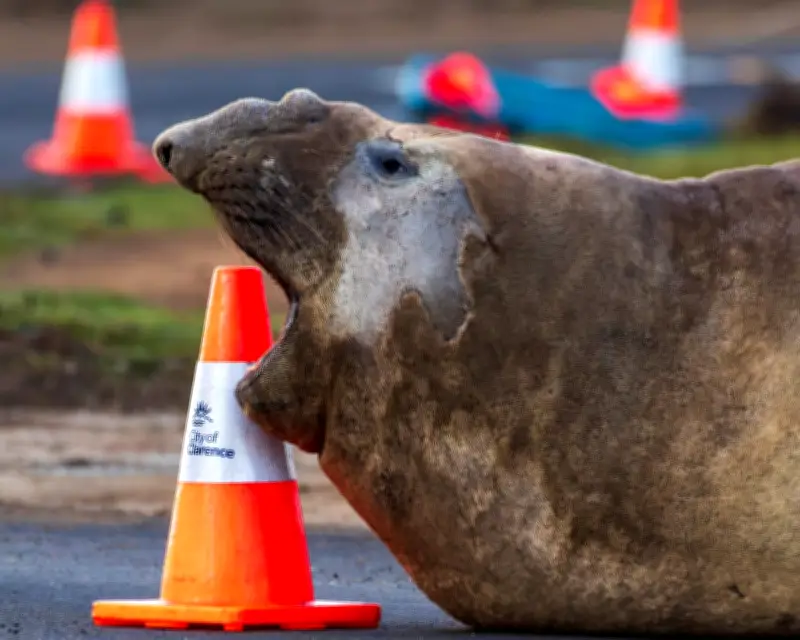
Neil, the one-tonne southern elephant seal known for crushing traffic cones and bollards in rural Tasmania, has returned to sea, according to the state's Department of Natural Resources and Environment (NRE). The five-year-old seal spent several weeks at his usual twice-yearly haul-out spot in southern Tasmania, attracting millions of social media views and crowds of visitors.
Neil's Departure and Natural Behaviour
On Thursday, NRE confirmed that Neil appeared to have left the area. "Neil the Seal returned safely to sea last night. This is his natural behaviour and was expected," the department said in a statement. Officials noted that he might still return or haul-out at a nearby location in the short term, or head to southern feeding grounds. NRE's marine conservation program is monitoring the situation.
Authorities were unable to directly track Neil. An NRE spokesperson told the Guardian that a satellite tracking device attached in 2023 fell off during his annual moult "as expected and was recovered in 2024." Since then, Neil has not been tracked, as attaching a device is usually reserved for specific needs like veterinary intervention or relocation.

Previous Tracking Data
When Neil was tracked as a teenager, data showed he spent six months at sea, foraging over 1,600 km from south-west Tasmania, covering a round trip distance of more than 5,000 km. "This is normal behaviour for a young male southern elephant seal," the spokesperson said.
Public Safety Concerns and Warnings
Neil's departure came as crowds of visitors flocking to see the local celebrity reached potentially dangerous levels. Wildlife authorities issued a firm warning, urging people to keep at least 20 metres away, keep dogs on a lead at least 50 metres away, and avoid blocking his access to water. Euthanasia was considered a last resort if public safety could not be guaranteed.
Neil's Unique Background
Neil was born in southern Tasmania without a colony and is pre-programmed to return twice a year to rest and moult. Tasmania's southern elephant seal colonies were wiped out by sealers in the 1800s, with most now breeding on Macquarie and Heard Islands. Kris Carlyon, head of wildlife health and marine life at NRE, described Neil as "potentially one of the first southern elephant seal pups to be born back in Tasmania." He added, "Regardless of the resource burden and the challenges that Neil throws, we're pleased to see him."
Local Reaction and Relief
Tasmanian Premier Jeremy Rockliff expressed relief, stating, "We'll keep an eye out for him but otherwise the traffic cones and street signs of Tasmania can breathe a small sigh of relief." He commended the public for treating Neil with respect and caution while he was on land. Authorities have asked anyone who spots Neil to contact the marine mammal hotline.