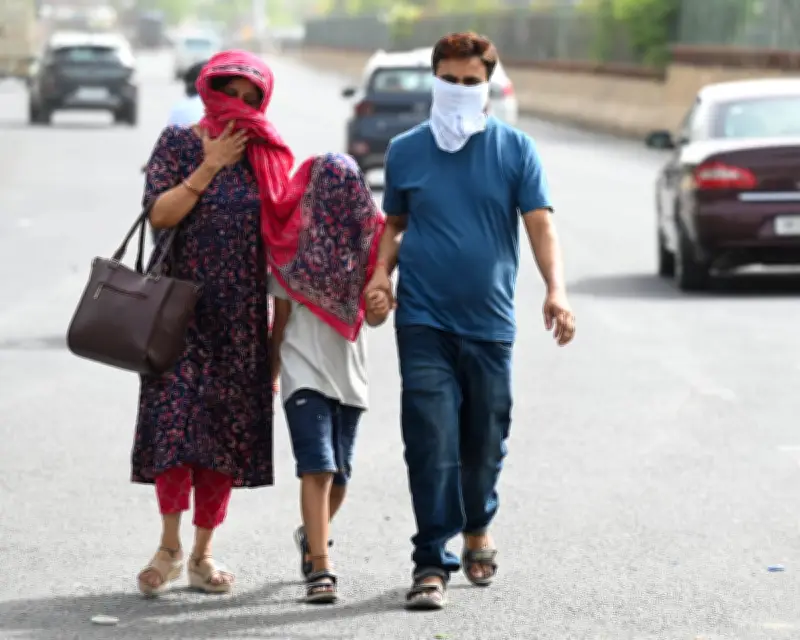
As temperatures soar past 41°C (105.8°F) in Delhi and across half of India's 28 states, schools have been ordered to close from mid-May until the end of June, often extending into the summer break. The Guardian spoke to school officials who report a sharp rise in heat-related closures in recent years, with no official record maintained. The impact on families, particularly working women, is severe.
Working Mothers Bear the Brunt
Sakshi Katyal, a mother in Noida, left her higher-paying corporate job for a less demanding role to manage repeated school disruptions. By February, exhausted from juggling work and childcare, she quit entirely. Her daughter's school closed in May, and she is uncertain when it will reopen. “My daughter would ask for food or attention while my manager was demanding reports,” she says. The family now survives on a single income while paying a monthly mortgage of ₹50,000 (£390). “Earlier, I managed everything on my own. Now, I have to ask my husband for money even for groceries or my daughter’s school fees.”
Informal Workers Hit Hardest
Zeenat Khatoon, 24, lives in a one-room rented home in Okhla, southeast Delhi, with her two children. She works as a domestic helper earning about ₹8,000 a month, with ₹5,000 going to rent. Her seven-year-old daughter's school has been closed for roughly seven months in the past year due to heatwaves and pollution. “When classes go online because of heatwaves, I don’t even know if my daughter is studying properly,” she says. She pays a local woman ₹600 a month to supervise her children, cutting down on groceries to afford it.

Economic Consequences Cascade
A labour economist, speaking anonymously due to workplace restrictions, says the disruptions create cascading economic consequences. “The majority of women are being forced either to stay at home or move into precarious, lower-paying work because they have to care for children during repeated school closures. This reduces household income and pushes some families closer to poverty.” Employers lose productivity, especially in healthcare and service sectors, while children lose months of education, affecting future potential.
Gender-Blind Climate Policies
Urvashi Prasad, a former director at government thinktank Niti Aayog, says India's climate response rarely accounts for women's unequal burden. “Most heat action plans in India barely have a gender component. We don’t analyse gender-disaggregated data to understand how climate policies affect women differently.” She notes that informal workers such as domestic helpers, street vendors, and agricultural labourers are hit hardest.
Defence of School Closures
A senior official in Delhi’s higher education department, speaking anonymously, defends the closures as emergency measures. “Sometimes governments are simply trying to save lives. Many schools lack the infrastructure to deal with extreme heat. We know online classes are not fully effective, but safety becomes the priority.”
Healthcare Sector Strain
Noopur Goyal, 44, a single mother and one of fewer than 500 paediatric cardiologists in India for a population of 1.4 billion, says her schedule collapses with school notifications. “How do I work properly on shifts? Suppose I have an important case tomorrow and my child’s school closes. What do I do?” She adds, “You rarely hear a man saying, ‘I can’t go to work because my maid hasn’t come.’ But women have to say that all the time.”