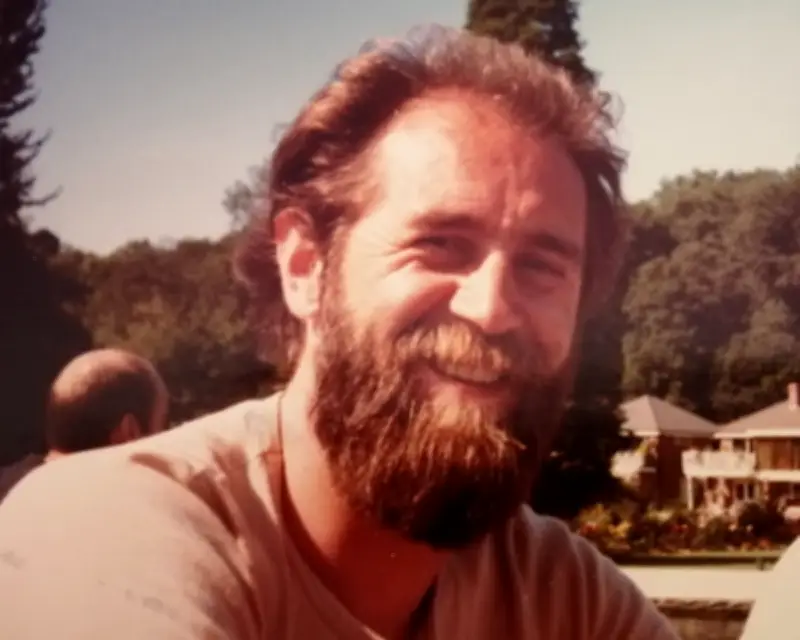
Graham Clarke, who has died aged 83, led a life marked by an intellectual journey from architecture and early computing to the depths of psychoanalysis, particularly the object relations theory of Ronald Fairbairn. This theory, which emphasizes relationships over Freudian drives, became the cornerstone of his work, resulting in five books and 30 papers, including the co-edited 2014 anthology Fairbairn and the Object Relations Tradition.
Early life and education
Born in Colchester, Essex, to Nora (nee Prior) and Phil Clarke, Graham spent part of his childhood in Sydney, Australia, before returning to Essex to attend Clacton County High School. He studied architecture at the Bartlett School in London, earning a BSc, and later an MSc in computer science. His formative years were influenced by the radical 1960s: he attended the Anti-University of London, where figures like RD Laing challenged institutional boundaries, and protested against the Vietnam War at Grosvenor Square.
Career and contributions
After working as a systems analyst at companies including Mills & Allen and Marconi, Graham joined the University of Essex in 1986 as a computer officer, becoming a visiting fellow until his death. There, he collaborated on the Intelligent Buildings Project, inspired by Le Corbusier, exploring how technology and psychology could reshape architecture. He also pursued studies at the Tavistock Institute, completing an MA in psychoanalytic theory, and a PhD at Essex on Fairbairn's object relations theory.

An avid cinephile, Graham applied Fairbairn's framework to films such as Memento, Spirited Away, and The Singing Detective. He co-authored Cinema, Trump and the American Dream (2022) with his son. His first book appeared in 2006, and his final one, An Introduction to Fairbairn's Psychology of Dynamic Structure, was published in 2025.
Personal life and activism
A keen athlete and perpetual student, Graham was happiest among friends and family, with a love for laughter. He was deeply committed to CND and the anti-apartheid movement. Through activism, he met his second wife, Sandra Davies, a drama teacher, in the early 1980s; they married in 2002. He is survived by two children, Zoë and his son, from his first marriage to Jacky Beck, which ended in divorce, as well as Sandra's children, Eleanor and James, and five grandchildren.