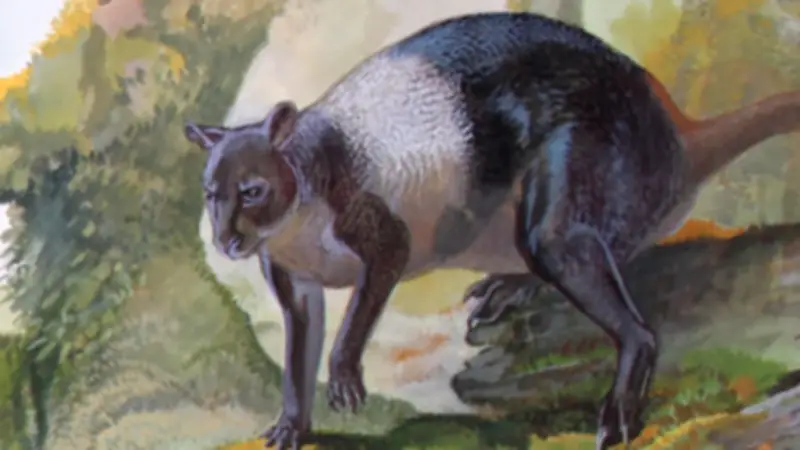
A new study published in npj Biodiversity reveals that the giant kangaroo Protemnodon tumbuna survived in northern New Guinea until approximately 6,500 years ago, much later than previously thought. This discovery challenges the conventional view that Australian and New Guinean megafauna went extinct around 20,000 to 50,000 years ago.
Discovery of the Taora Fossil
The key evidence comes from a finger bone unearthed at the Taora rockshelter on the northwest coast of Papua New Guinea. During archaeological excavations in 2004, a dense deposit of animal remains was recovered, including a single macropodid finger bone much larger than any modern New Guinean marsupial. Researchers compared its shape and size to extinct and extant kangaroo species, concluding it most likely belongs to Protemnodon tumbuna, a species previously known from nearby sites.
According to lead author Dr. Loukas Koungoulos, "The Taora fossil is clearly different from all currently living macropodids and most similar to Protemnodon species." The bone shows unique traits, including prominent projections near the claw joint, but overall closely resembles the genus Protemnodon.

Extended Coexistence with Humans
Combined with earlier finds at Nombe rockshelter (22,000-27,000 years ago) and a tooth from Lachitu cave (18,000 years or younger), the Taora fossil indicates that people coexisted with this giant kangaroo for tens of thousands of years. This period saw the development of agriculture and village societies in New Guinea, contradicting the "overkill" model that humans rapidly hunted megafauna to extinction.
"The evidence points to a complex scenario," said Dr. Koungoulos. "Each species' biology and ecology played a key role in how they fared against human hunting and habitat change."
Factors Behind Extinction
Studies of Protemnodon teeth from Queensland suggest these kangaroos had small home ranges and did not migrate far, making them vulnerable to habitat loss. Drying climates over the past few hundred thousand years shrank their highland rainforest habitat in New Guinea, while human populations grew. Eventually, the habitat became too small to support a viable population, and even light hunting could have driven them to extinction.
The findings contribute to a more nuanced understanding of megafauna extinction, showing that not all species disappeared simultaneously. As researchers continue to explore remote sections of New Guinea, further twists in the story of Australia and New Guinea's shared palaeohistory may emerge.