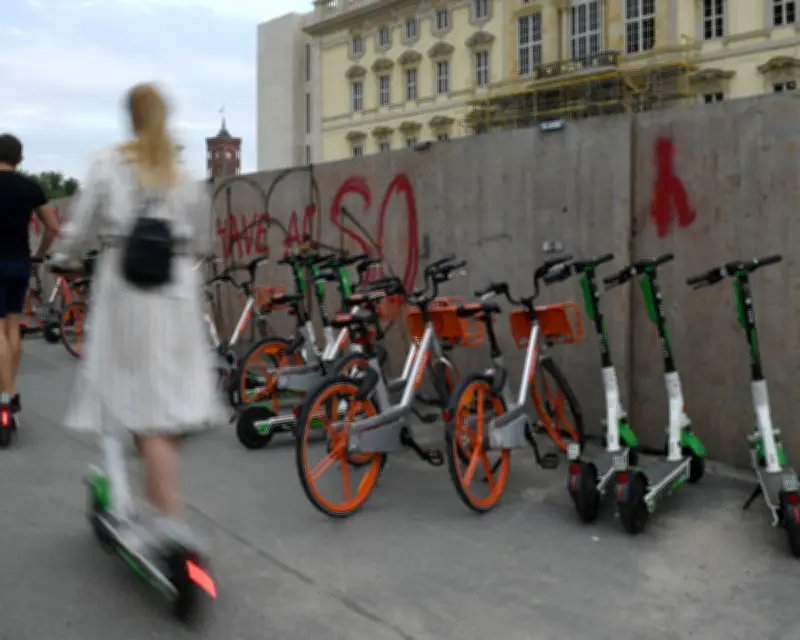
The German government has announced plans to hold rental e-scooter operators legally liable for accidents involving their vehicles, a move that could have far-reaching consequences for the micromobility industry. Under the new legislation, companies such as Lime, Bird, and Tier will be responsible for damages caused by their scooters, even when riders are at fault.
New Liability Framework
The proposed law, unveiled by the Federal Ministry of Transport on Thursday, shifts the burden of liability from individual riders to the rental companies. Currently, riders are primarily responsible for any accidents, but the government argues that operators should bear greater responsibility given their role in deploying and maintaining the vehicles.
According to a ministry spokesperson, the change is designed to ensure that victims of e-scooter accidents can seek compensation from companies with deeper pockets. The law also aims to incentivize operators to improve safety features and enforce stricter usage rules.

Industry Reaction
The announcement has drawn mixed reactions. The German Association of Micromobility Providers warned that the new rules could stifle innovation and lead to higher rental prices. "This will make it harder for startups to operate and could ultimately reduce the availability of eco-friendly transport options," said association director Markus Weber.
However, consumer advocacy groups have welcomed the move. "For too long, victims of e-scooter accidents have struggled to get compensation. This law finally holds the companies accountable," said Petra Müller of the German Consumer Protection Agency.
Impact on Accidents and Insurance
Germany has seen a sharp rise in e-scooter accidents since legalizing them in 2019. Official data shows that reported accidents involving e-scooters increased by 45% in 2025 compared to the previous year, with over 8,000 incidents resulting in injuries. The new law is expected to push operators to invest in better training, geofencing technology, and mandatory insurance for their fleets.
Operators will now be required to carry third-party liability insurance for each scooter, covering damages up to €5 million. Failure to comply could result in fines and a ban from operating in German cities.
Broader Implications
The German legislation could set a precedent for other European countries grappling with the regulation of e-scooters. France and the UK are reportedly considering similar measures. The European Commission has also signaled interest in harmonizing liability rules across member states.
In Berlin, where e-scooters are ubiquitous, the new rules have sparked debate among city officials. "We want to promote sustainable mobility, but not at the expense of public safety," said Berlin's transport senator, Lena Schmidt. "This law strikes the right balance."
The law is expected to come into effect in early 2027, pending parliamentary approval. Operators will have a six-month transition period to adjust their insurance and safety protocols.