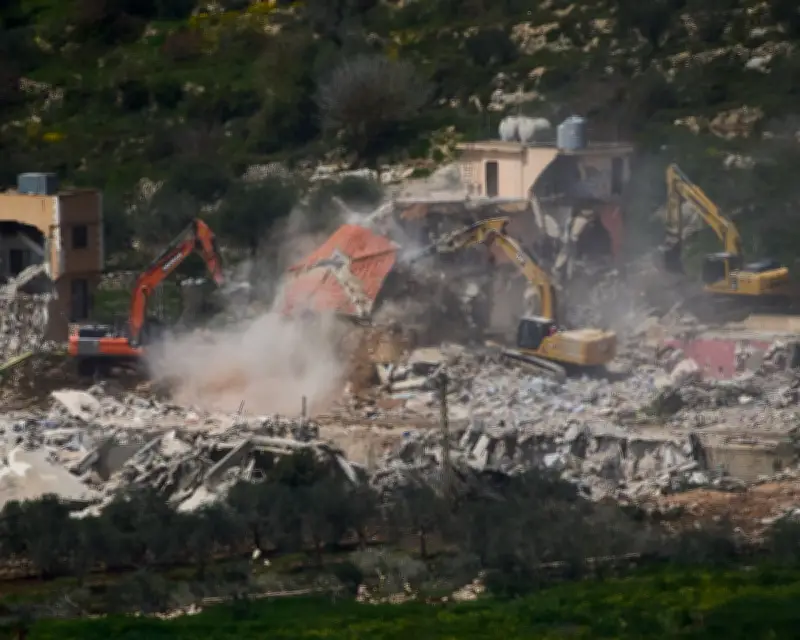
Experts have raised concerns that multinational construction equipment companies could be facilitating Israeli war crimes by supplying machinery used for demolitions and settlement building in occupied Palestinian territories. A new report highlights how bulldozers, excavators, and other heavy equipment from major global brands are deployed in actions that violate international law.
Allegations of Complicity
The report, compiled by legal experts and human rights organizations, alleges that companies providing construction machinery to Israel may be complicit in war crimes. The equipment is used to demolish Palestinian homes and infrastructure, as well as to construct illegal settlements in the West Bank. These actions are considered violations of the Fourth Geneva Convention, which prohibits an occupying power from destroying property or transferring its civilian population into occupied territory.
Key Findings
- Demolitions: Bulldozers and excavators from companies like Caterpillar, Komatsu, and Volvo are used to raze Palestinian homes, schools, and agricultural structures. In 2025 alone, over 800 structures were demolished, displacing thousands.
- Settlement Construction: The same machinery is employed to build and expand Israeli settlements, which are illegal under international law. The number of settlers in the West Bank has grown by 15% since 2020.
- Corporate Responsibility: Experts argue that companies have a duty under the UN Guiding Principles on Business and Human Rights to avoid contributing to human rights abuses. By continuing to supply equipment without safeguards, they risk legal liability.
International Reactions
The report has sparked calls for governments to investigate and potentially sanction the companies involved. Several European nations have already reviewed export licenses for construction equipment to Israel. The United Nations has urged all states to ensure that businesses under their jurisdiction do not contribute to unlawful activities in occupied territories.

Company Responses
Some companies have denied any wrongdoing, stating that their equipment is sold to civilian contractors and that they cannot control its final use. Others have pledged to review their supply chains. However, critics argue that these measures are insufficient given the scale of the violations.
Legal experts suggest that victims of demolitions could file lawsuits against the manufacturers in national courts, citing precedents where companies have been held accountable for aiding human rights abuses. The International Criminal Court could also examine corporate complicity as part of its ongoing investigation into the situation in Palestine.
Broader Implications
This issue highlights the growing scrutiny of corporate involvement in conflict zones. As awareness increases, companies face pressure to conduct human rights due diligence and cease operations that could facilitate war crimes. The outcome of this case could set a precedent for corporate accountability in armed conflicts worldwide.