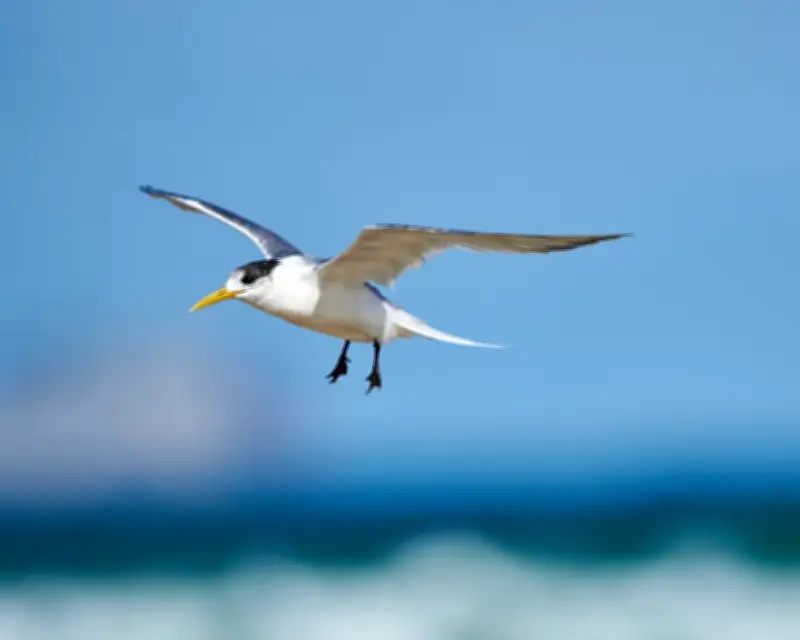
A crested tern found dead on the South Australian coast has tested positive for the highly pathogenic H5 bird flu strain, marking the first time this deadly virus has been detected in a local Australian seabird. The discovery, announced by the Department of Primary Industries and Regions South Australia (PIRSA) on Friday, has prompted heightened surveillance along the state's coastline.
Details of the Discovery
The infected bird was discovered at a remote beach near the Murray River mouth, approximately 100 kilometers southeast of Adelaide. Laboratory tests confirmed the presence of the H5N1 subtype, a strain responsible for mass die-offs of wild birds and poultry globally. According to PIRSA chief veterinary officer Mary Carr, the virus is genetically similar to strains circulating in Asia and Europe, suggesting it may have been carried by migratory birds.
“This is the first detection of highly pathogenic H5 avian influenza in a wild bird in Australia that is not an imported captive bird or a migratory species,” Carr said. “It represents a significant shift in the epidemiology of the disease in our region.”

Implications for Wildlife and Biosecurity
The finding has raised alarms among conservationists and poultry farmers, as the virus can decimate seabird colonies and spread to domestic flocks. South Australia is home to several important breeding sites for crested terns, including colonies on the Coorong and nearby islands. The state government has urged the public to report any sick or dead birds to the Emergency Animal Disease Watch Hotline.
“We are asking people not to touch or handle dead birds,” Carr emphasized. “While the risk to humans remains low, the virus can be transmitted to people through close contact with infected birds.”
Australia has previously been free of highly pathogenic H5 strains in wild birds, though low-pathogenic strains have been detected. The arrival of H5N1 could threaten the country's $1.2 billion poultry industry, which has strict biosecurity measures in place.
Response Measures
PIRSA has established a 10-kilometer surveillance zone around the discovery site, where rangers will monitor bird populations and collect samples. The federal government’s Wildlife Health Australia network has been alerted, and state authorities are conducting risk assessments for nearby poultry farms.
“This is a developing situation, and we are working closely with the Commonwealth and other states to ensure a coordinated response,” said South Australia’s Minister for Primary Industries, Clare Scriven. “Our priority is to contain the virus and protect both wildlife and agricultural interests.”
The crested tern is a common seabird along the Australian coast, and its population is not currently considered threatened. However, scientists warn that repeated outbreaks could have long-term impacts on seabird ecology.