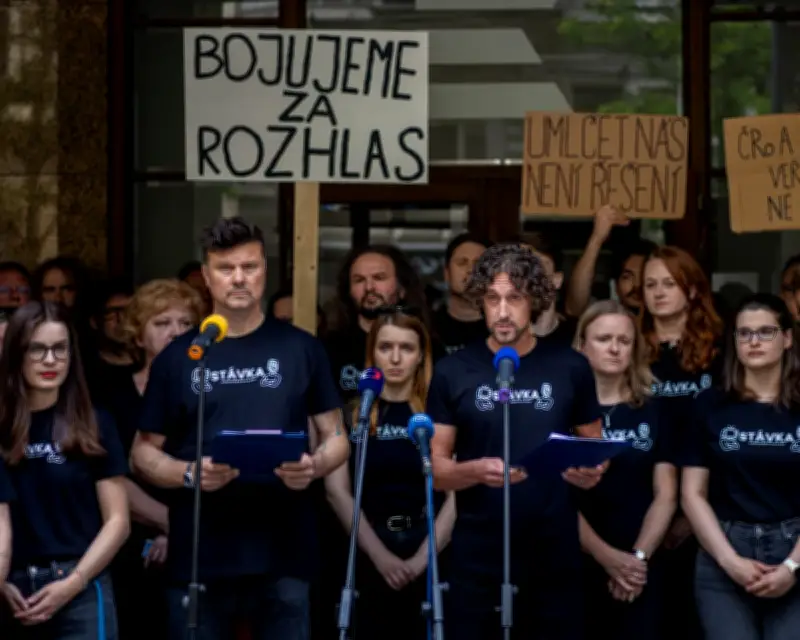
Czech public broadcasters Czech Television and Czech Radio have initiated an indefinite strike, halting most programming in protest of proposed government changes to their funding model. The industrial action, which began on Monday, has disrupted news bulletins, talk shows, and cultural programming, with only essential services like emergency broadcasts continuing.
Background of the dispute
The strike stems from a government plan to replace the current license fee system with a direct state budget allocation. Critics argue this would undermine the broadcasters' editorial independence, making them vulnerable to political pressure. The government, led by Prime Minister Petr Fiala, maintains the change is necessary to modernize funding and reduce the financial burden on households.
Impact on programming
Czech Television has suspended its main evening news broadcast and most live shows, airing reruns and static slides instead. Czech Radio has similarly cut back, with only music and pre-recorded content filling the airwaves. The strike is expected to last until an agreement is reached, with both sides expressing little willingness to compromise.

According to the Czech Television union, more than 90% of staff have joined the walkout. Union spokesperson Jan Kroupa said, "We are defending the independence of public service broadcasting. This is not about salaries or conditions; it's about the very existence of free and impartial media in the Czech Republic."
Political reactions
Prime Minister Fiala has criticized the strike as unnecessary, stating that the government's proposal includes safeguards for editorial independence. "We are committed to ensuring that public broadcasters remain independent and accountable to the public, not to politicians," he said. However, opposition parties and media watchdog groups have sided with the broadcasters, warning that the funding change could lead to censorship.
Broader context
The dispute is part of a wider trend in Central Europe, where governments in Poland, Hungary, and Slovakia have faced accusations of tightening control over public media. The Czech Republic, long seen as a bastion of media freedom in the region, is now at the center of a battle over the future of independent broadcasting.
Public support for the strike appears strong. A recent poll by the Median agency found that 68% of Czechs oppose the government's funding plan, and 62% support the broadcasters' strike. Many citizens have taken to social media to express solidarity, using the hashtag #StrikeForFreedom.
What happens next
Talks between the government and broadcaster representatives have so far yielded no breakthrough. The strike is set to continue indefinitely, with both sides digging in. The outcome could have significant implications for media independence in the Czech Republic and beyond, as other European nations watch closely.