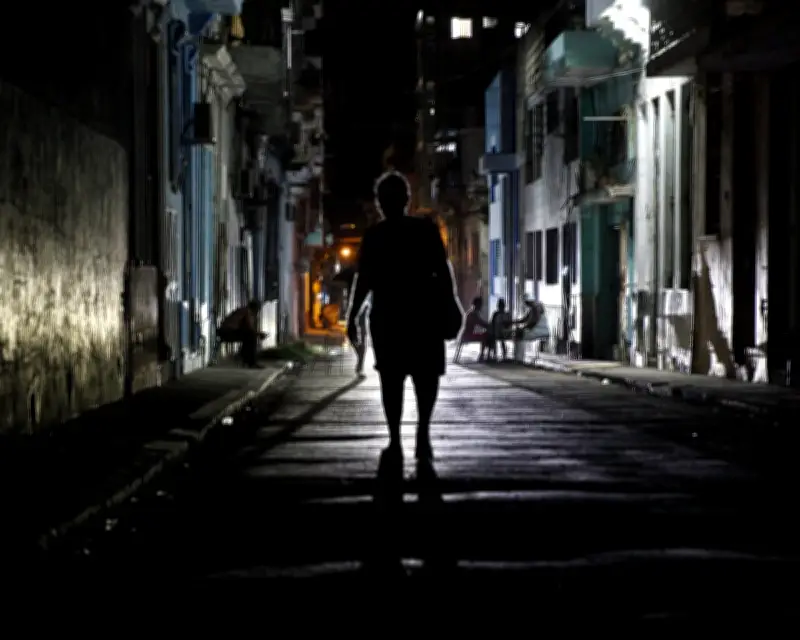
Cuba was plunged into darkness on Monday as the country suffered its third nationwide blackout in six months, leaving millions of residents without electricity and raising fresh concerns about the reliability of the island's deteriorating energy infrastructure.
Power outage details
The blackout began at approximately 11:20 a.m. local time, according to the state-run Electric Union (UNE). The outage affected all 15 provinces and the special municipality of Isla de la Juventud. The UNE reported that the failure originated at the Antonio Guiteras thermoelectric plant in Matanzas, the country's largest and most critical power station, which went offline unexpectedly.
Officials said the blackout was caused by a fault in the plant's transmission system, leading to a cascade failure across the national grid. As of Tuesday morning, power had been restored to parts of Havana and a few other regions, but the UNE warned that full restoration could take up to 48 hours due to fuel shortages and equipment limitations.

Impact on daily life
The outage disrupted daily life for Cuba's 11 million citizens. Hospitals switched to backup generators, but many reported fuel shortages that could limit their ability to operate. Public transportation halted, and businesses closed as the country ground to a standstill. Residents in Havana described scenes of chaos, with traffic lights out and people stranded in sweltering heat.
“This is unbearable. We have no water, no food in the fridge, and no way to charge our phones,” said María López, a 54-year-old teacher from Centro Habana. “The government keeps promising fixes, but nothing changes.”
Underlying causes
The blackout is the latest symptom of Cuba's deep energy crisis. The country's power plants are aging and poorly maintained, with many operating at reduced capacity due to lack of spare parts and fuel. The United States embargo restricts access to foreign investment and technology, exacerbating the problem. In recent months, Cuba has also faced a severe shortage of imported fuel, partly due to reduced shipments from allies Venezuela and Russia.
According to the UNE, the Antonio Guiteras plant has suffered multiple breakdowns this year alone. The plant, built in the 1980s, requires frequent repairs that are often delayed due to resource constraints. The government has acknowledged the crisis but blames the embargo and global economic pressures for the recurring outages.
Government response
Cuban President Miguel Díaz-Canel addressed the nation on Monday evening, vowing to prioritize the restoration of power and to invest in renewable energy sources. “We are working tirelessly to restore service and prevent future collapses,” he said. “The blockade imposed by the United States is the main obstacle to our progress.” However, critics argue that the government's mismanagement and lack of investment are equally to blame.
The blackout has sparked protests in some neighborhoods, with residents banging pots and pans in frustration. Social media posts showed lines of people queuing for water and ice, while others expressed anger over the lack of communication from authorities.
Broader context
This blackout follows similar nationwide outages in February and April 2026, each lasting several days. The frequency of these events has heightened fears about the stability of Cuba's power grid and its ability to support essential services. International observers say the crisis is a major test for the government ahead of the upcoming party congress, where economic reforms are expected to be debated.
The blackout also threatens Cuba's fragile tourism sector, which had been slowly recovering. Hotels in Varadero and other resort areas were forced to rely on generators, but some guests cut short their vacations. The outage is likely to deepen the economic hardship facing ordinary Cubans, who already struggle with shortages of food, medicine, and basic goods.
Looking ahead
The UNE has announced plans to increase investment in solar and wind energy, but analysts say such projects will take years to materialize. In the short term, Cuba will continue to depend on its decrepit fossil-fuel plants and uncertain fuel imports. The government has appealed for international aid, including fuel donations and technical assistance, but the response has been limited.

As Cubans endure yet another blackout, the question remains: how many more outages will it take before the system is overhauled? For now, the island remains in the dark, waiting for a solution that seems increasingly elusive.