Venezuela is reeling from a series of powerful earthquakes that have left at least 150 dead and hundreds injured, overwhelming the main mortuary in the capital, Caracas, as the government struggles to mount an effective response.
Mortuary Overwhelmed as Death Toll Rises
The Bello Monte mortuary in Caracas has been forced to stack bodies in hallways and refrigerated trucks as the death toll continues to climb. According to a spokesperson for the morgue, the facility has received more than 80 bodies since the first quake struck on Friday, far exceeding its capacity of 30. “We are completely overwhelmed,” the spokesperson said. “We have no more space in the coolers, and we are running out of body bags.”
Series of Quakes Strikes Central Venezuela
The earthquakes, ranging from magnitude 5.2 to 6.8, have struck the central region of Venezuela over the past three days, with the epicenter near the town of San Juan de los Morros, about 100 kilometers south of Caracas. The first quake, a magnitude 6.8, hit on Friday evening, causing widespread damage to buildings and infrastructure. Subsequent aftershocks have hampered rescue efforts and triggered landslides that have blocked roads and cut off remote communities.

According to the Venezuelan Seismological Institute, more than 200 aftershocks have been recorded, with at least 10 exceeding magnitude 5.0. The institute warned that further significant quakes are possible in the coming days.
Government Response Criticized as Inadequate
The government of President Nicolás Maduro has declared a state of emergency in the affected states, including Miranda, Aragua, and Carabobo. However, critics say the response has been slow and disorganized, with rescue teams lacking essential equipment and supplies. The opposition-controlled National Assembly has called for international assistance, but the Maduro government has so far refused, citing concerns about sovereignty.
“The government is failing to coordinate rescue efforts, and people are dying as a result,” said Juan Guaidó, the opposition leader. “We need international help now, but Maduro is more concerned with politics than saving lives.”
Hospitals Overwhelmed, Power Outages Widespread
Hospitals in the affected areas are also struggling to cope with the influx of injured. The Pérez Carreño Hospital in Caracas reported that it has treated more than 200 patients since Friday, many with crush injuries and fractures. The hospital is running low on medical supplies, including painkillers and antibiotics, and has been forced to perform surgeries in hallways due to lack of space.
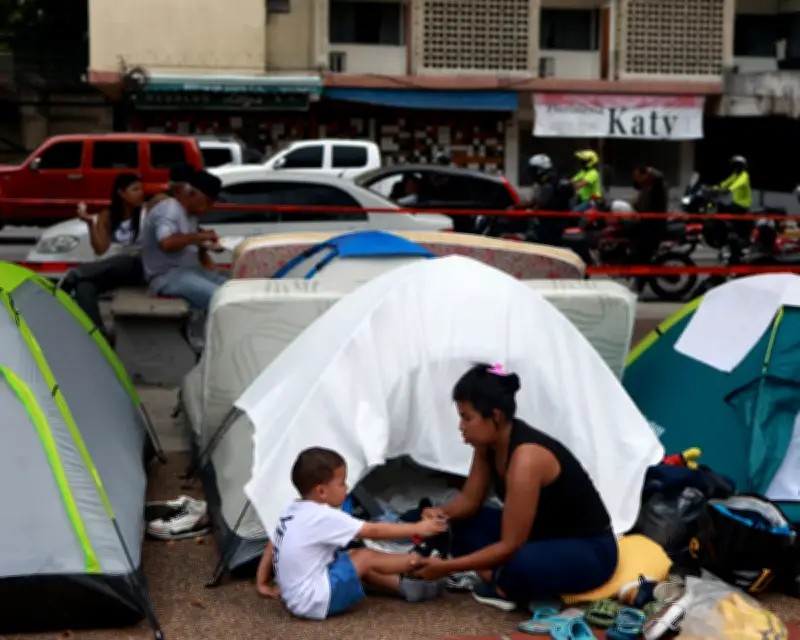
Power outages have affected large parts of the capital and surrounding states, with the state electricity company, Corpoelec, reporting damage to several substations. Residents have taken to the streets to protest the lack of response, with some looting stores and gas stations.
International Aid Efforts Hampered by Political Tensions
Several countries, including the United States, Russia, and China, have offered assistance, but the Maduro government has only accepted aid from Russia and China, rejecting offers from the U.S. and the European Union. The U.S. Agency for International Development (USAID) has pledged $2 million in emergency aid, but it remains unclear if the Venezuelan government will allow it to enter.
“The political situation is complicating what should be a straightforward humanitarian response,” said a Red Cross official who spoke on condition of anonymity. “We need to get supplies to the people who need them, but we are being blocked at every turn.”
Rescue Efforts Continue Amid Aftershocks
Rescue teams are working around the clock to search for survivors trapped under rubble, but their efforts are being hampered by ongoing aftershocks and damaged infrastructure. In the town of San Juan de los Morros, near the epicenter, rescue workers have pulled at least 30 survivors from collapsed buildings, but dozens more are believed to be trapped.
“We are working as fast as we can, but the situation is dire,” said a firefighter at the scene. “We need more equipment and more personnel, but we are doing everything we can with what we have.”

The death toll is expected to rise as rescue teams reach more remote areas. The government has not yet provided a comprehensive assessment of the damage, but officials estimate that thousands of homes have been destroyed or damaged.