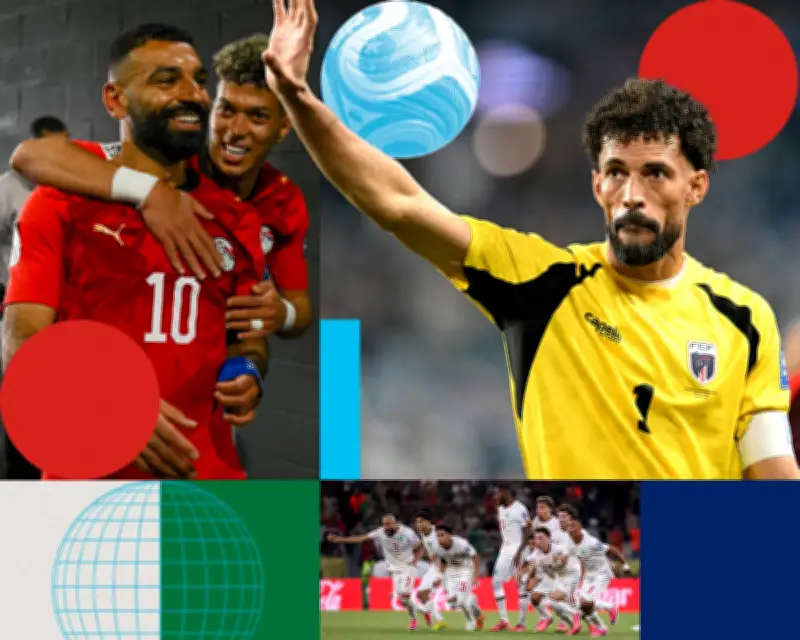
Cape Verde's remarkable journey to the World Cup knockout stages captured global attention, but their heroics only served to underscore a broader disappointment for African football. Despite the island nation's historic achievement, the continent's overall showing in the tournament left many wondering what might have been.
A Continent's Mixed Bag
Africa sent five representatives to the World Cup: Morocco, Senegal, Ghana, Cameroon, and Cape Verde. While Cape Verde exceeded expectations by reaching the round of 16, the other four nations fell short of their potential. Morocco, fresh off a semifinal appearance in 2022, failed to replicate that magic, exiting in the group stage. Senegal, the reigning African champions, also bowed out early after a promising start.
According to football analyst Kwame Nkrumah, "Cape Verde's success is a testament to the growing depth of African football, but the continent's overall performance was below par. We had the talent to have multiple teams in the knockout stages, but tactical naivety and lack of composure cost us."

Cape Verde's Historic Run
Cape Verde, a tiny archipelago of just over 500,000 people, became the smallest nation ever to reach the World Cup round of 16. They stunned the football world by topping a group that included European heavyweights Netherlands and African rivals Cameroon. Their attacking flair and defensive resilience won admirers worldwide.
Coach Bubista said after their final group match, "We have shown that size does not matter. Our players gave everything for the nation and for Africa. We hope this inspires other small nations to dream big."
Missed Opportunities Elsewhere
While Cape Verde celebrated, other African teams reflected on missed chances. Ghana, after a strong qualifying campaign, lost a crucial group match to Uruguay in a controversial penalty decision. Cameroon, despite a spirited draw against Brazil, failed to advance. Morocco, burdened by high expectations, struggled with injuries and tactical adjustments.
Statistics paint a stark picture: only one of five African teams reached the knockout stage, a 20% success rate. In contrast, South America saw 60% of its representatives advance, while Europe had 50%. Africa's collective goal difference was negative, with 12 goals scored and 18 conceded in group play.
The Road Ahead
African football officials acknowledge the need for improvement. The Confederation of African Football (CAF) has launched initiatives to enhance coaching standards and youth development. "We must learn from Cape Verde's example and build a more competitive environment across the continent," said CAF President Patrice Motsepe.
For now, Cape Verde's achievement stands as a beacon of hope. Their run earned them an additional $10 million in FIFA prize money, which will be reinvested in grassroots programs. As the football world looks toward the next World Cup, Africa's potential remains immense, but the continent must convert promise into performance.