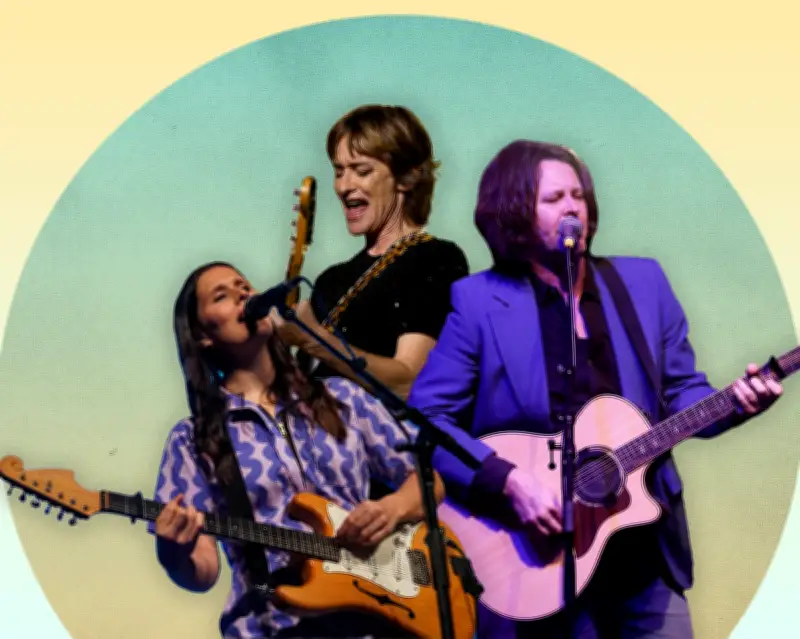
More than 50 Australian musicians, including Tame Impala, Courtney Barnett, and Nick Cave, have signed an open letter to Prime Minister Anthony Albanese, pleading with him to prevent artificial intelligence companies from using their music without consent. The letter, released on Thursday, warns that unchecked AI development poses an existential threat to the country's music industry.
Open Letter Demands Action
The letter, titled "Don't Kill Music," calls on the government to introduce new laws requiring AI companies to obtain explicit permission from artists before using their work to train algorithms. It also demands that artists be fairly compensated for any use of their music. The signatories represent a broad cross-section of Australian music, from indie rock to hip-hop and electronic.
"AI companies are scraping our music from the internet without asking, without paying, and without credit," the letter states. "This is not innovation—it is theft. We urge the Prime Minister to act before it is too late."

Growing Global Concern
The letter echoes similar campaigns in the United States and Europe, where artists have raised alarms about AI-generated content mimicking their styles. In Australia, the issue has gained urgency as local musicians report finding AI-generated tracks that closely replicate their voices and melodies.
"It's terrifying to think that anyone could create a song that sounds exactly like me without my involvement," said Courtney Barnett, one of the signatories. "We need protection now, before this becomes the norm."
Government Response
A spokesperson for Prime Minister Albanese said the government is aware of the concerns and is reviewing the impact of AI on creative industries. "The Prime Minister values the contribution of Australian artists and is committed to ensuring they are fairly rewarded for their work," the spokesperson said. However, no specific legislative timeline was announced.
The music industry contributes an estimated $4.5 billion annually to the Australian economy and employs tens of thousands of people. Industry groups warn that unregulated AI could decimate these numbers by enabling mass copyright infringement.
What Artists Want
The letter outlines three key demands: a legal requirement for AI companies to obtain a license before using copyrighted music, a transparent system for tracking and compensating artists, and stronger enforcement against infringing AI-generated content. The signatories also call for a national summit on AI and creative industries to develop a long-term strategy.
"We are not against technology," said Tame Impala's Kevin Parker in a statement. "We just want to ensure that the people who make the music are not left behind. AI can be a tool, but it should not be a replacement for human creativity."
International Precedents
Other countries are already moving to address the issue. The European Union's AI Act, passed earlier this year, includes provisions for transparency and copyright compliance. In the United States, the Copyright Office has launched an inquiry into AI-generated content. Australia's current copyright laws are considered outdated and ill-equipped to handle the challenges posed by generative AI.
"We risk becoming a digital colony if we don't act," said Dr. Emily Richards, a copyright law expert at the University of Sydney. "Our artists' work is being used to train AI models that will then compete with them. The government needs to step in."
Next Steps
The letter has garnered widespread support across the music community, with more artists expected to add their names in the coming days. A petition accompanying the letter has already collected over 20,000 signatures. The campaign is being coordinated by the Australian Music Industry Network, which plans to hold a rally outside Parliament House in Canberra later this month.
"We have the Prime Minister's ear on this issue, and we will keep pushing until we see real change," said the network's director, Sarah Jones. "The future of Australian music depends on it."