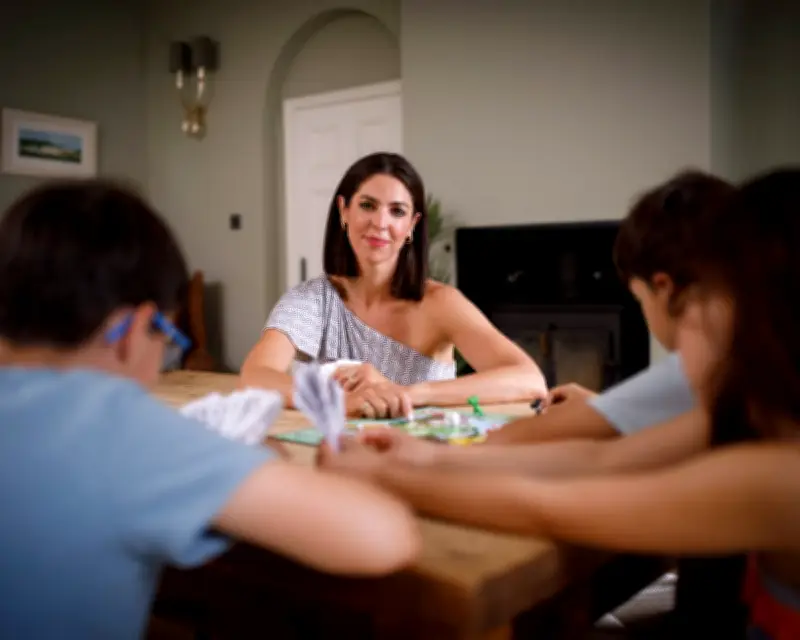
Psychotherapist and author Anna Mathur found that banning social media and email during her children's waking hours dramatically improved her mood, her relationships, and her children's happiness. By using an app to block access to social media and email when her children are home, she has become less irritable, more present, and has deepened her connection with her husband and three kids, aged seven, nine, and 11.
The Realization
Mathur, who works with frazzled parents, used to pick up her phone hundreds of times a day. She believed it helped her decompress, but realized it was actually making her snappier and less present. 'Every time I checked it, there was something to action, a notification of something new, something that told me I was useful and productive, giving me dopamine hits that motherhood didn’t offer,' she says. The phone had become her coping mechanism.
She noticed a physical reaction when her children interrupted her mid-scroll: a spike of irritation and a sharpness in her voice. 'I had been treating my snapping as a patience problem and a character flaw, but what I realised is that reaching for your phone more than you want to is not weakness – it’s biology,' she explains.

Science Behind the Struggle
Research shows that for those with ADHD, or those tired from chronic stress and poor sleep, the pull of the phone is strong. Impulse control is a frontal lobe function that weakens when tired or overwhelmed. Mathur was also going through perimenopause, which makes it harder as oestrogen declines and the brain becomes more reward-seeking.
She initially tried to limit her use but kept breaking her own rules. So she downloaded an app called App Block, which blocks social media and email during the hours her children are home, allowing only 15 minutes to check in once they are in bed. For work tasks, she uses a laptop, which feels more intentional.
Unexpected Calm
The result was a profound sense of calm. 'The low hum of overstimulation I had normalised turned out to be costing me more than I knew. My nervous system finally had room to breathe,' she says. She became less irritable and more present without effort.
One habit that helped was narrating her phone use out loud. When she picks it up in front of the kids, she says, 'I’m just adding bananas to the shopping.' This keeps her accountable and tells her children she’s not disappearing.
Deeper Relationships
Now, when the kids watch television in the evening, Mathur reads a book instead of scrolling. Being spoken to mid-chapter doesn't spike stress the same way. She had forgotten what it felt like to be bored, where rest lives and ideas surface.
The change has also improved her relationship with her husband. 'Much of our evenings together had been sitting side by side on our phones, each somewhere else entirely. Without the phone as my default, I’m more available. We talk more, debriefing over our days. We give each other more undivided attention, which is the most valuable thing you can give anyone,' she says.
Mathur concludes: 'My kids see me relaxed and resting. They tell me about the small details and worries of their days, they snuggle up to me. These moments are so special and now I’m fully present for them.' Her new book, How to Stop Snapping at the People You Love, is published by Penguin Life.