Celestial Pairing in the Pre-Dawn Sky
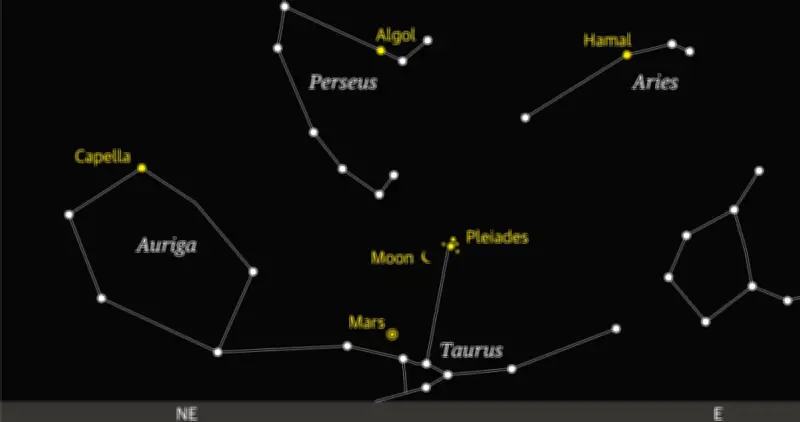
Skywatchers are in for a treat this week as the waning crescent moon slides close to the Pleiades star cluster, popularly known as the Seven Sisters. The pairing will be visible in the eastern sky before sunrise, offering a striking sight for early risers.
The moon, now in its waning crescent phase, will appear as a thin sliver of light. The Pleiades, a cluster of young, hot blue stars located about 440 light-years away, will shine brightly nearby. The best viewing time is about an hour before sunrise, when the sky is dark enough to see the stars but the moon is not too low on the horizon.
How to Spot the Pairing
Look to the east-northeast sky about 45 minutes before sunrise. The moon will be a delicate crescent, with the Pleiades cluster sitting just above or to the side, depending on your location. Binoculars will enhance the view, revealing more of the cluster's fainter stars.

The Pleiades, also known as Messier 45 or the Seven Sisters, is one of the most recognizable star clusters in the night sky. It has been observed since ancient times and features in myths and legends across many cultures.
Significance of the Event
This close approach, or conjunction, is a chance to appreciate the beauty of the night sky. The waning crescent moon is only about 10% illuminated, making it a delicate sight. The Pleiades, with its six or seven visible stars to the naked eye, will be a perfect companion.
According to astronomers, such pairings occur regularly as the moon orbits Earth, but each one offers a unique perspective. The moon's phase and position relative to the cluster change each month, making this event special for those who take the time to observe.
For the best experience, find a location with a clear, unobstructed view of the eastern horizon and minimal light pollution. The event is visible from both hemispheres, though the exact positioning will vary. Observers in the Northern Hemisphere will see the moon below the cluster, while those in the Southern Hemisphere may see it to the side.
Tips for Photographers
Photographers can capture the pairing with a DSLR camera and a telephoto lens. A tripod is essential to avoid blur. Set the ISO low to reduce noise, and experiment with exposure times to balance the moon's brightness with the fainter stars of the Pleiades.
This celestial event is a reminder of the dynamic nature of our solar system and the beauty of the cosmos. Don't miss this chance to see the waning crescent moon paired with the Seven Sisters.