Ask Fuzzy: Is it true a candle flame leans inside a car as it accelerates?
By Rod Taylor
July 1 2026 - 9:30am

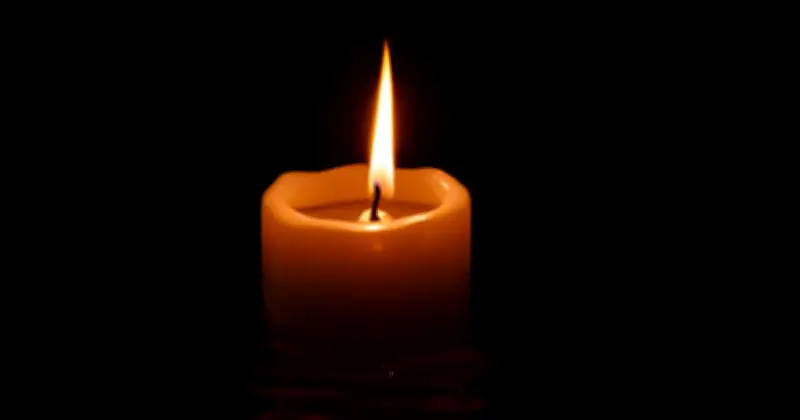
The obvious question is why you have a lighted candle inside a car in the first place. (A safer experiment would be to experiment with a helium balloon instead.)
Counter-intuitive, perhaps, but the flame leans forwards as you accelerate. Photo: Canva
As with any good science experiment, we must control the variables. That would mean making sure the windows are wound up and there are no vents blowing that might interfere.
If we do that, then, yes, it is a real effect. Counter-intuitive, perhaps, but the flame leans forwards as you accelerate.
We know the flame is very light, so it seems strange that it sways around like one of those perfumed pine trees hanging off the rearview mirror.
The key to this phenomenon is buoyancy. Flames rise because they consist of hot, ionised gases, less dense than the surrounding air.
When the car accelerates, it throws the mass of air inside towards the rear. It squeezes the flame, which literally floats in the opposite direction.
If you understood that, you'll realise that it should work in both directions. As the car accelerates, the flame leans forward - not backwards as does our perfumed pine tree.
Remember that the effect of acceleration is indistinguishable from gravity. So what then would happen to a flame where there is no apparent gravity, such as in the International Space Station?
Flames in Zero Gravity
You'd predict that, instead of rising, a flame will hover in one spot.
This was of great concern to the early space program after a fire broke out in the Apollo I spacecraft in 1967, killing all three astronauts.
That prompted them to conduct tests on unmanned missions to see what would happen in a pure oxygen environment under weightless conditions.
As expected, the flame did not rise, but then there was also something unexpected.
On Earth, combustion products are cleared away by convection and the flame's buoyancy.
Neither of those occur in a zero-gravity environment, and so the gasses accumulate around the flame, depriving it of oxygen.
It doesn't take long before the flame extinguishes itself.
But could you keep the flame burning by blowing on it? Experiments showed that while the flame would spread, it was usually too slow to keep it burning.
Apollo I was different because the spacecraft was still on the launchpad. Here, gravity allowed the flames to propagate with lethal consequences.
The Fuzzy Logic Science Show is at 11am Sundays on 2xx 98.3FM. Send your questions to AskFuzzy@Zoho.com; Podcast: FuzzyLogicOn2xx.Podbean.com