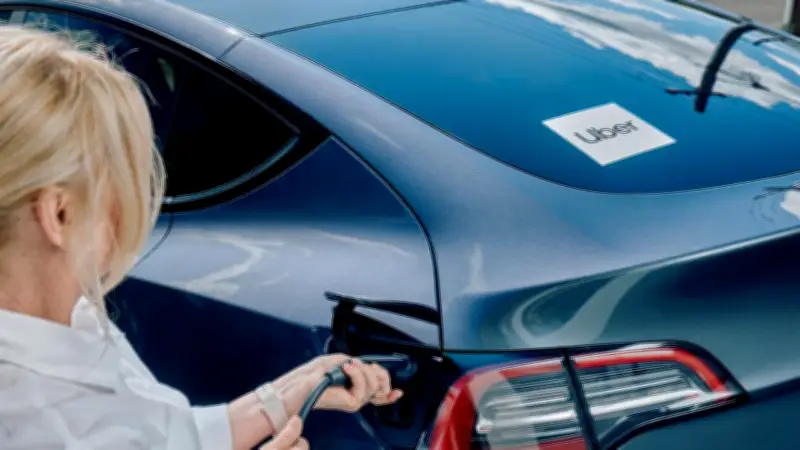
A groundbreaking electric vehicle (EV) trial is being expanded in Australia, with new analysis revealing that renters could save up to $2000 annually by using their car to power their home. The initiative, given the green light by Energy Minister Chris Bowen, allows plug-in hybrid owners to charge during the day and use the stored electricity at night when power costs are higher.
Potential savings for renters
According to analysis by Rewiring Australia, a renter with a 10kWh plug-in hybrid battery could save approximately $2000 per year by using their vehicle to power their home most of the time. For households with larger EVs, the savings could reach as much as $4000 per year. These figures are comparable to the savings from installing rooftop solar and a household battery—options often unavailable to renters.
Call for mass adoption
Rewiring Australia chief executive Francis Vierboom welcomed the government's expansion of the vehicle-to-grid pilot but emphasized the need for a pathway to mass adoption. More than 6000 households have already expressed interest in a recent trial. "That level of interest shows families are ready to use their cars to cut power bills," Vierboom said. He urged the government to extend home battery rebates to bidirectional EV chargers, allowing more households to benefit from the technology.

"Renters often can’t install solar panels or permanent home batteries on a property they don’t own. A bidirectional EV charger gives them another way to store cheap daytime power and use it when electricity is expensive," he added. "The battery does not have to be bolted to the wall to help a household cut its bill. For many families, it is already sitting in the driveway."
Grid benefits and government support
Rewiring Australia estimates that if half of renters had access to bidirectional chargers, it could provide up to 2.5GW of active storage, relieving pressure on the grid. Last week, Energy Minister Chris Bowen announced a $13.6 million funding boost through the Australian Renewable Energy Agency for a vehicle-to-grid and smart charging pilot. The program, delivered through Amber Electric, will allow another 950 customers to participate in the vehicle-to-grid trial.
Noting a fall in emissions in 2025, Mr Bowen told question time on Tuesday that the progress was "very much a story of batteries." He explained, "We know that the impact on energy prices mainly comes from coal and gas, which is expensive in the night-time. What we are doing is transferring a lot of that cheap, renewable energy from the middle of the day through the night through batteries." He added that only the US and China have added more battery capacity than Australia, and in per capita terms, Australia leads by a long way.
Rising EV sales
EV sales have surged in recent months, with 16.4 per cent of new cars sold in April being an electric vehicle. This increase is attributed to rising fuel prices due to the Iran war and greater access to Chinese-made EVs.