A prominent Sydney academic has been found to have used artificial intelligence to draft an opinion piece that advised students to avoid relying on such technology. The Sydney Morning Herald subsequently removed the article, deeming it unacceptable.
The Controversial Article
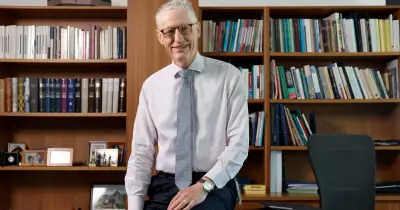
Professor Cath Ellis, pro-vice chancellor for quality and integrity at Western Sydney University, authored an opinion piece published in the Sydney Morning Herald last month. The piece was a response to an article by academic Kylie Moore-Gilbert, who had cautioned students against enrolling in university due to the ease of outsourcing learning to AI. Ellis argued that while the AI problem is real, students should still pursue higher education and put in genuine effort. She wrote, "Don't cut corners. Don't outsource your thinking, however tempting that may be. If the system is as fragile as some claim, then genuine effort will not be hidden. It will stand out."
AI Detection and University Response
However, when the column was submitted to the AI-detection service Pangram, it was flagged as 100% AI-generated. In response to inquiries from Guardian Australia, Western Sydney University confirmed that Ellis had used AI in writing the column. A spokesperson stated that Ellis uploaded 40,000 words of her own original materials into a Copilot Large Language Model, which summarized her knowledge and provided prompts for early drafts. The spokesperson emphasized that this use of AI was "sophisticated and appropriate," drawing on her decade of expertise. They added that tools like Pangram can detect AI but cannot judge the appropriateness of its use.

Editorial Policy and Removal
The article did not disclose the use of generative AI. The editorial policy of Nine, the Sydney Morning Herald's parent company, permits AI for initial research and ideas but prohibits using AI to write stories for publication. The policy states that assistive AI does not require declaration, but any AI-generated material must be labeled. Nine did not comment, but the Herald's editor, Jordan Baker, confirmed the article was removed for not meeting editorial guidelines. Baker said the Herald was not informed of the AI use by either the author or the university, calling it "unacceptable."
Broader Context
This incident is part of a growing trend of media outlets publishing AI-generated content without disclosure. Earlier this year, Crikey removed articles from a writer who used AI for proofing, and a freelance journalist was cut by the New York Times after using AI for a book review. Additionally, university graduation speakers praising AI have faced backlash from students concerned about job prospects.