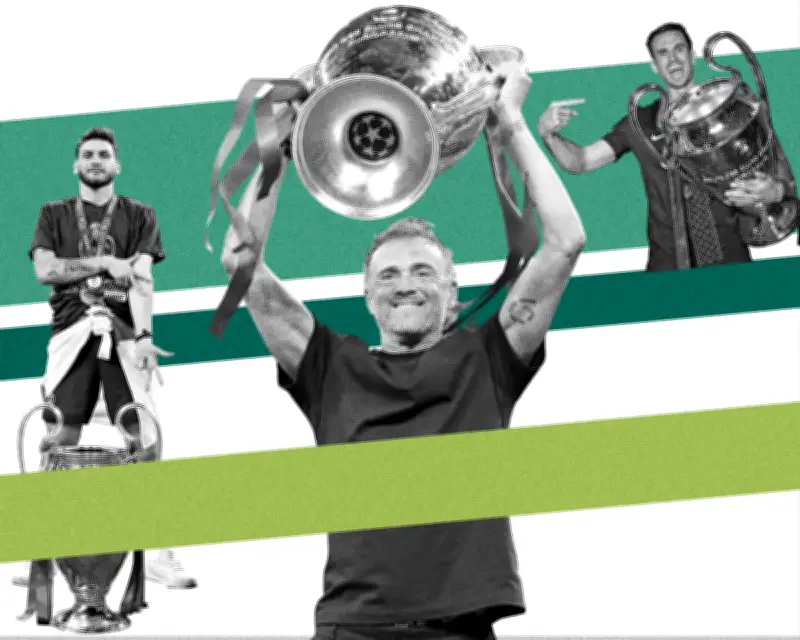
Paris Saint-Germain's victory in the Champions League final on Saturday elevates them to a new tier of European football's pantheon. Since 1990, only Real Madrid had successfully defended the trophy, with three consecutive wins from 2016 to 2018. No poor team has ever won the European Cup or Champions League, but only truly great sides have retained it. PSG now stand alongside some of Europe's best-ever teams, though with notable caveats.
A Dominant Run to the Title
Arsenal pushed PSG closer than Inter had in the previous year's final, and there is always something slightly unsatisfying about a victory on penalties. However, the quality of this PSG side cannot be denied. They put six past Bayern Munich in the semi-final, their superiority far greater than the one-goal aggregate margin suggested. A similar story unfolded in the quarter-final against Liverpool, where a 4-0 aggregate win did not fully reflect how much better they were. Even Chelsea, who may feel unlucky to have lost the first leg of their last-16 tie 5-2, were crushed 3-0 in the second leg—a devastating assertion of authority with three goals scored by an almost bored opponent.
Midfield Control and Tactical Brilliance
While attacking verve catches the eye, PSG also boast a midfield capable of controlling possession and stifling games, particularly when Fabián Ruiz is available. This mirrors the great Spain sides of the past two decades. Luis Enrique's heritage as part of the great Barcelona team of the late 1990s, under Louis van Gaal and alongside Pep Guardiola, is evident. He now stands among the greats of European coaching: only Carlo Ancelotti has won more European Cups or Champions Leagues, and only Bob Paisley, Zinedine Zidane, and Guardiola have matched his three titles.

A New Model for the Future
As the world grapples with the end of the Guardiola consensus, Luis Enrique may have found a model for the future. His sides combine technical quality and midfield control with thrilling directness wide, similar to Lamine Yamal and Nico Williams in Spain's Euro 2024-winning team. Khvicha Kvaratskhelia has supplanted Yamal as the best player in the world on current form. Given space to run into, as Bayern too often allowed, the outcome is inevitable. Arsenal did well to restrict him in the final, with Bukayo Saka doubling up with Cristhian Mosquera, but even then, Kvaratskhelia was the source of PSG's equalizer—a slight hesitation and panicked response from Mosquera producing a penalty.
Arsenal's Tactical Approach
Going toe-to-toe with PSG, as Bayern did, allows Kvaratskhelia and Désiré Doué to revel in space. Arsenal had little option but to sit deep and absorb pressure. While this may frustrate those who want all soccer to be like the first leg of PSG vs. Bayern, defending is part of the game. With better forwards, the approach might have worked for Arsenal. However, they struggled late on, partly because Viktor Gyökeres could not hold the ball up, and partly because Noni Madueke could not replicate Saka's quality of delivery from set pieces. Even then, they were one small mistake from a 1-0 win, and after that, they lost because they twice missed the target in the shootout. The game plan was not the problem; a couple of minor details were.
Caveats: Fatigue and Financial Dominance
However appealing PSG's soccer, there are caveats. Firstly, their players are much fresher than most European rivals, especially Arsenal. David Raya, Declan Rice, Martín Zubimendi, Gabriel, and William Saliba all played over 2,500 minutes of league soccer this season, while four others played over 2,000. Of PSG's starting XI, only Vitinha played more than 2,000. This is before considering how much more demanding the Premier League is than Ligue 1: Wolves, Burnley, and West Ham offer significantly more of a test than the French equivalent bottom three of Metz, Nantes, and Nice.

PSG's wage bill is roughly double that of the next highest in France, Marseille, and more than 10 times that of Le Havre, the lowest in Ligue 1. Their wealth has effectively destroyed the domestic circuit as a contest, and the source of that wealth should never be forgotten. It is 15 years since Qatar Sports Investment bought PSG, and having finally realized that celebrity soccer players are rarely the path to on-field success, they now have the team they must have dreamed of. All 10 outfield players started the last two finals, and with only two aged 30 or older and five aged 25 or under, there is no reason they should not continue to be successful for a long while.
The Broader Cost
The question remains: at what cost, both to the balance of the French league and to any notion that soccer may retain some community or spiritual value, rather than simply being the propaganda tool of an autocratic state? This is an extract from Soccer with Jonathan Wilson, a weekly look from the Guardian US at the game in Europe and beyond. Subscribe for free here. Have a question for Jonathan? Email soccerwithjw@theguardian.com, and he will answer the best in a future edition.