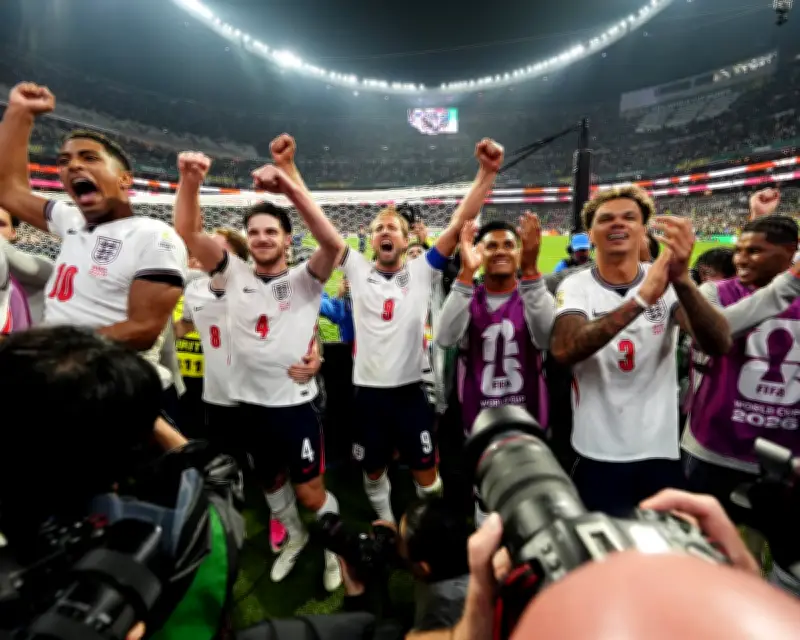
When the final whistle blew just before dawn, and England had beaten Mexico in that encounter now hailed as a World Cup classic, glasses were raised and strangers embraced in pubs across England that had been granted special permission to stay open. In living rooms and student flats too, millions of people experienced something increasingly rare in modern Britain: uncomplicated national joy.
National Joy Amid Political Malaise
For a few hours, the endless arguments over the national budget, the revolving door of British prime ministers and the country’s political malaise fell silent. England’s World Cup victory that night did not erase Britain’s divisions. But watching the team sing their anthem song, Wonderwall, to their cheering supporters reminded us of something every successful democracy depends upon: pride in a shared national story.
National pride everywhere is one of the preconditions for good government. It is a battery that powers collective action. All countries ask their citizens to pay taxes, support difficult reforms and make sacrifices for people they will never meet. Making such public policy becomes much easier when people believe they belong to the same national community, much as Britain did when the NHS was created.

A Third Way for English Identity
A key question facing Britain today is: who is fully part of the country? For too long, England has avoided this question altogether, treating national pride as a choice between imperial nostalgia and historical apology, between a narrow understanding of Englishness and an England embarrassed by its own past. The England football team offer a third way. That team embody and celebrate the very diverse England of today, with Harry Kane wearing the captain’s armband, Jude Bellingham dictating the midfield, and Bukayo Saka stretching defences with fearless pace. During the match, nobody was asking where these footballers’ grandparents had been born. They were simply willing this English team to win.
Celebrating modern Englishness has remarkably little to do with the entirely separate question of Britain’s immigration policy. Democracies should respond to what their citizens want, and British voters have legitimately made clear that they would like immigration reduced. Immigration policy can determine who enters Britain. But it will not decide how English national identity reflects the millions of people who already live in England. That question can only be answered by the national story England chooses to tell about itself.
The Flag's Changing Story
The football team that qualified for the World Cup offered one compelling version of England’s contemporary story, drawing on talent from every corner of an England that has been shaped by decades of immigration. Just months ago, debate raged over whether the English flag was an expression of exclusion when Raise the Colours attached flags to lamp-posts across the country. Yet this week millions of people wrapped themselves in the same flag without hesitation. The flag itself had not changed – the story attached to it had.
The strongest national identities are those that continually adapt who belongs within a national story. Canada’s one-time prime minister Pierre Trudeau understood this when he redefined Canadian identity half a century ago. Rejecting the idea that only Canada’s British and French founding peoples embodied the nation, he created identities that allowed Canadians of every background to belong fully while retaining their own cultural traditions. Rather than weaken Canada, it has strengthened attachments, with more naturalised citizens reporting a strong sense of belonging to Canada than Canadian-born citizens. This experiment shows that a strong national pride need not be inherited. It can and should be adapted and evolved around shared commitments that find a way to include people from different backgrounds.

A Vision Beyond 90 Minutes
At a time when politicians, pundits and some tech billionaires increasingly invite us to see Britain as irreparably divided, England’s football team offered a different vision: confident, ambitious and united by shared purpose rather than shared ancestry. That vision alone will not solve Britain’s economic problems or repair its frayed public services. But it can remind us that good government ultimately depends upon the stories citizens tell themselves about who “we” are. After Monday’s game, millions of people briefly inhabited the same story. Britain’s challenge now is to write one that lasts longer than 90 minutes.
Maya Tudor is an associate professor at Oxford University’s Blavatnik School of Government