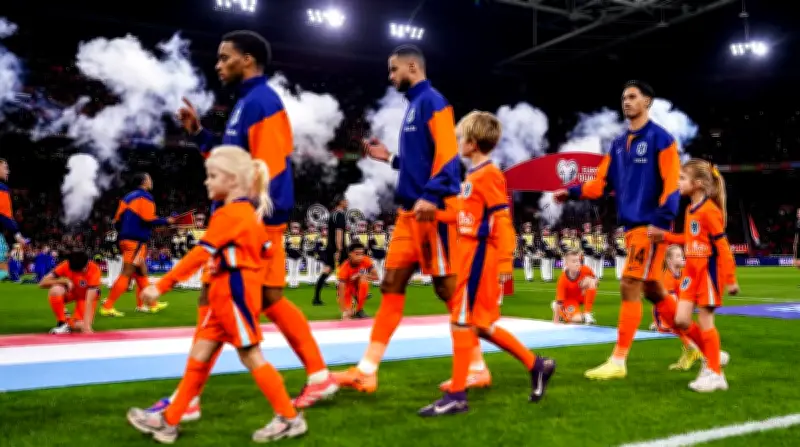
The Oranje had high hopes but a spate of injuries has tempered expectations. By Marcel van der Kraan. This article is part of the Guardian's 2026 World Cup Experts' Network, a cooperation between some of the best media organisations from the 48 countries who qualified. theguardian.com is running previews from three countries each day in the run-up to the tournament kicking off on 11 June.
The Plan
Has Ronald Koeman ever started a major tournament with more headaches? Probably not. He is known as an exceptionally ambitious perfectionist, which means the preparation for this World Cup has been the most troublesome of all his years as the national-team head coach. Injuries are part and parcel of the game but it becomes a real problem when, in the run-up to a major tournament, around half the starting XI is either ruled out completely or sidelined for months. In the spring Koeman said he would only take players who were fully fit and playing regularly, but that stance became difficult to maintain.
Tottenham's Xavi Simons suffered an anterior cruciate ligament injury in April and won't be back until next year. The PSV midfielder Jerdy Schouten is also recovering from the same injury. Matthijs de Ligt, who has often partnered Virgil van Dijk in central defence, has not regained full fitness after a back problem. Barcelona's Frenkie de Jong missed most of the season, Inter's Denzel Dumfries was out for four months. Manchester City's Tijjani Reijnders and Nathan Aké were often on the bench while Memphis Depay sustained a serious hamstring injury at the end of his season in Brazil.

Koeman, a disciple of the Johan Cruyff school of football thinking, prefers attacking football and, during the qualifiers, stuck to a very traditional Dutch style, but he may have to abandon his favoured 4-3-3 system for the tournament. The Netherlands – who are in a tough group with Japan, Sweden and Tunisia – must now select their fittest and strongest players, rather than the most talented ones that reflect the Dutch footballing philosophy. The KNVB (the Royal Dutch Football Association) has made reaching the semi-finals a minimum target; Koeman wants to go even further and win the tournament. But that will require a lot of hard work.
"What I'd like people to say about my team is that they play with a lot of intensity, that they can't say we didn't do enough," Koeman told Fifa in May. "I want them to play with confidence, with personality, understanding what their qualities are. And to always respect every opponent despite the fact there may be so-called smaller nations at the World Cup."
The Coach
While at Barcelona, Johan Cruyff once asked Ronald Koeman to share a room with a young talent named Pep Guardiola. The two developed under Cruyff's attacking philosophy and took that with them into coaching. Koeman is the only coach in the Netherlands to have enjoyed success with all three major clubs – Ajax, Feyenoord and PSV – both as a player and as a manager. For that reason, he is widely respected across the country, has a strong reputation, and has long enjoyed a positive relationship with his international players.
Koeman heads to the World Cup during a time when his wife, Bartina, is undergoing treatment for cancer. She was diagnosed with breast cancer in 2010 and it came back in 2018 and 2023. During the qualification campaign, Koeman occasionally left the training camp to be with her. "If I had to leave it was to be with my wife but she is incredibly strong and positive," he said. "That is something very special. [But] it is very difficult. She cannot do everything she used to and she gets tired more easily because of the side effects [of chemotherapy]. But we focus on the things that matter most to us and give her energy. That is something beautiful to see."

Star Player
For decades the Netherlands' star players were forwards but the Dutch have struggled to produce world-class strikers in recent years so for the first time, the team's strongest department is the defence, led by the formidable Virgil van Dijk. The Liverpool defender is in effect Koeman's extension on the pitch. The 33-year-old is the undisputed leader and the most vocal figure in the dressing room and on the field. He represents the squad in discussions with the federation and regularly consults Koeman on tactics. He is not immune to criticism from Koeman though, who says: "I have to stay on his back to make sure he remains sharp. He knows that – it has been the case since our time at Southampton. But he is a fantastic leader."
Unsung Hero
Micky van de Ven has been in the spotlight in the Netherlands for having to battle relegation with Tottenham and has been left out of Koeman's squads in the past because the head coach was concerned about the defender picking up muscle injuries by playing too much. Van de Ven was never part of a big-club academy and had to fight his way to the Premier League via Volendam and Wolfsburg. He brings energy and power to the team with his exceptional pace, strong tackling and relentless running. At international level, he has had to battle to win a starting place but looks to have done so just before the World Cup.
Probable Starting XI
Illustration: Guardian
What to Expect from Fans at Games?
One thing the Americans can be certain of: the Oranje march will set Kansas City, Dallas and Houston alight. The famous orange double-decker bus was shipped to the United States a month before the World Cup and will travel to every city where the Dutch are playing. Thousands of Dutch fans will take part in city-centre processions. On its top deck, well-known Dutch artists, DJs and bands will perform, setting the tone and creating a good atmosphere. And we'll also see the Links Rechts (left-right) routine to the song by Snollebollekes.
Relationship with the US/Trump?
King Willem-Alexander and Queen Máxima have made several visits to Donald Trump in the White House. These visits are viewed as a strategic strengthening of relations between the Netherlands and the US, with the king acting as a diplomatic bridge. However, public opinion in the Netherlands towards Trump is largely negative and prominent Dutch politicians have in the past been outspoken, with some describing Trump as "a political charlatan".
Written by Marcel van der Kraan for De Telegraaf.