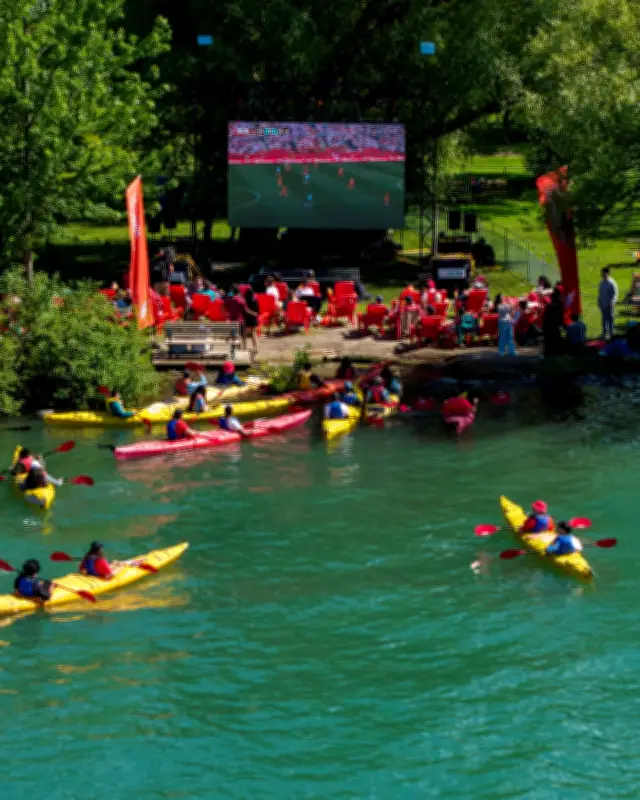
Fans across the globe have transformed public spaces into vibrant hubs of celebration as the World Cup 2026 unfolds, with record-breaking crowds attending official and unofficial viewing parties. From Asia to the Americas, the tournament has sparked unprecedented communal engagement, drawing millions to giant screens in parks, stadiums, and city squares.
Massive Turnout in Host Cities and Beyond
In the United States, one of the host nations, viewing parties in New York City's Times Square attracted over 50,000 fans per match, according to local authorities. Similarly, in Mexico City, the Zócalo square hosted up to 100,000 spectators for key games, with organizers reporting a 30% increase in attendance compared to the 2022 tournament. Canada's viewing parties in Toronto's Nathan Phillips Square saw daily crowds of 40,000, with police noting smooth operations despite the high volume.
"The energy is electric," said Maria Lopez, a fan attending a screening in Mexico City. "It's amazing to see so many people united by the love of football."

Global Participation Extends to Non-Host Nations
In Europe, fan zones in London's Hyde Park and Berlin's Brandenburg Gate drew over 200,000 combined attendees on match days, with German organizers reporting a 25% rise in foreign visitors. In Asia, Tokyo's Yoyogi Park viewing area hosted 80,000 fans daily, while in Sydney, Australia, the International Convention Centre precinct saw 60,000 per session. African nations also joined in, with Johannesburg's Soccer City precinct attracting 70,000 fans for matches featuring African teams.
"This is the first time we've seen such massive turnouts in non-host countries," noted Dr. Ahmed Hassan, a sports sociologist at Cairo University. "The tournament's expanded format and global appeal have broken previous attendance records."
Economic and Social Impact
Local businesses have benefited significantly, with bars and restaurants near fan zones reporting revenue increases of up to 40% during match days. City officials in Rio de Janeiro estimated that viewing parties generated $15 million in local spending during the group stage alone. However, some cities faced challenges, including traffic congestion and noise complaints, which authorities managed with additional policing and designated quiet hours.
"We've had to adapt quickly," said Toronto city councillor John Davis. "The demand has been overwhelming, but the economic boost is undeniable."
As the tournament progresses into the knockout stages, organizers anticipate even larger crowds, with final matches expected to draw record numbers. The World Cup 2026 viewing parties have not only showcased the sport's unifying power but also demonstrated the potential for large-scale public events to drive economic activity and cultural exchange.