As the globe gears up for the 2026 FIFA World Cup, set to be co-hosted by Canada, Mexico, and the United States, many sports enthusiasts are reminiscing about the 1994 tournament, the last time the event took place in North America. That World Cup was a blend of spectacle, turmoil, and triumph, leaving an indelible mark on soccer history. Its opening day alone remains one of the most extraordinary days in sports, but the story goes far beyond that.
A Controversial Host
In 1988, the United States was awarded the hosting rights over Brazil and Morocco, a decision that sparked debate. Soccer was not a mainstream sport in America; there was no professional league, and the national team had not qualified for a World Cup since 1950. A nationwide poll conducted just three weeks before the tournament revealed that 71% of Americans were unaware that the event was imminent.
The Draw
The group stage draw took place in Las Vegas in December 1993, aiming for maximum publicity. It featured celebrities like actors, musicians, supermodels, and athletes. The late Robin Williams stole the show with his improvisational comedy, poking fun at FIFA officials and speaking gibberish to foreign dignitaries. The 1994 World Cup was already making headlines before a single match was played.

Opening Ceremony
The star-studded opening ceremony was held in Chicago before a sold-out crowd of 67,000, with an additional 750 million viewers worldwide. Hosted by Oprah Winfrey, who famously fell off the stage, the event included performances by Richard Marx and Diana Ross, who missed a penalty kick from five meters as part of a choreographed stunt. Then-President Bill Clinton officially opened the tournament.
A Wild First Day
June 17, 1994, was one of the most chaotic days in US sports history. Besides the World Cup opening ceremony and matches, other major sporting events included Game 5 of the NBA Finals between the New York Knicks and Houston Rockets, a ticker-tape parade for the New York Rangers after their Stanley Cup victory, Arnold Palmer playing his final US Open at age 64, and Ken Griffey Jr. tying Babe Ruth's record for 30 home runs before the All-Star break. However, all these events were overshadowed by a massive car chase involving former NFL star OJ Simpson, who was later arrested for murder. Nearly 100 million Americans watched the chase, which ESPN later documented in the film "June 17th, 1994."
The On-Field Action
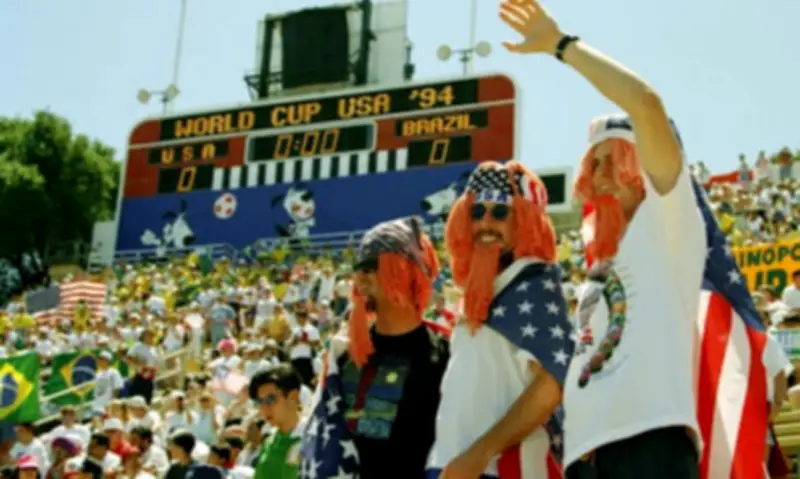
Once the games began, "USA 94" proved to be more than just a novelty. The tournament introduced several firsts: player names on shirts, a win worth three points to encourage attacking play, and the first World Cup match played indoors (USA vs. Switzerland at the Pontiac Silverdome). The final between Brazil and Italy ended 0-0 after extra time, becoming the first World Cup final decided by penalties. The host nation advanced to the knockout stage, where they faced Brazil on Independence Day. Brazil won 1-0, but the match symbolized the underdog's rise. Bulgaria stunned defending champions Germany en route to the semifinals. Romania, led by Gheorghe Hagi, eliminated Argentina in a 3-2 thriller. Saudi Arabia's Saeed Al-Owairan scored a memorable solo goal against Belgium, running from his own half to score. Brazil ultimately won the final, with Romário and Bebeto leading a disciplined side. The defining image remains Roberto Baggio's missed penalty, handing Brazil its fourth title.
Other Notable Incidents
Diego Maradona scored against Greece but failed a drug test after his next game, leading to his withdrawal. He stayed in the US as a commentator. Goalposts collapsed during Romania vs. Mexico, causing a long delay. Many games started at midday US time to suit European broadcasters, resulting in extreme heat. Colombia's Andres Escobar scored an own goal against the US, leading to elimination. Upon returning home, he was tragically murdered, reportedly linked to gambling losses by drug cartels.
The Legacy of 'USA 94'
The 1994 World Cup boosted soccer's popularity in the US, leading to the creation of Major League Soccer. The US also hosted and won the Women's World Cup in 1999. The tournament drew over 3.5 million spectators, averaging nearly 70,000 per match—records that still stand 32 years and seven World Cups later.