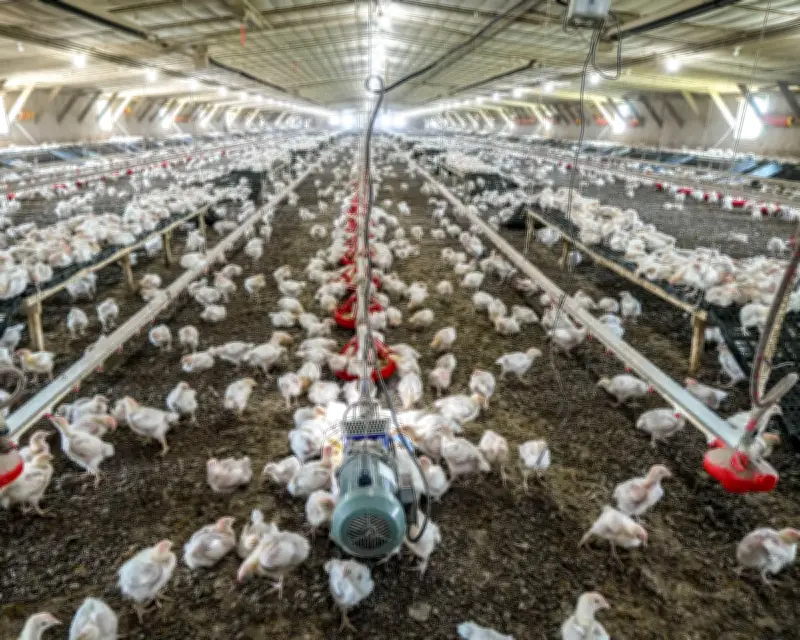
The average person now consumes about six times as much chicken and twice as much pork as their grandparents' generation, according to a new UN report. The global meat supply has quadrupled over the past 60 years and is projected to keep rising.
Poultry leads the surge
Data from the Food and Agriculture Organization (FAO) shows that poultry supply jumped from less than 3kg per person in 1961 to 17kg in 2022. Pork supply doubled to 15kg per person over the same period, while beef consumption remained stable at 9kg per person.
Environmental impact
Agriculture is the second most polluting sector globally. The FAO report forecasts that planet-heating emissions from agriculture will rise by 7.6% over the next decade, with livestock responsible for an estimated 80% of that increase. The average global meat supply rose from 25kg per person in 1961 to 47kg per person in 2022.

About 14% of meat and milk is lost during production or wasted after reaching supermarket shelves and restaurants, the report found.
Inequality in access
In low- and middle-income countries, where food insecurity is most prevalent, animal foods are many times more expensive relative to incomes than in wealthy nations. Doctors and climate scientists in rich countries often recommend eating less meat.
“The regional distribution and access is still very unequal,” said Daniela Battaglia, a livestock development officer at the FAO and co-author of the report. “While high-income countries still have quite high and stable consumption, low-income countries are still constrained by the affordability of animal products.”
Climate recommendations
The Intergovernmental Panel on Climate Change (IPCC) has identified a shift from meat-heavy to plant-rich diets as one of the most effective demand-side actions to cut greenhouse gas emissions. However, the FAO report, reviewed by the meat and dairy industry as well as external academics, stops short of recommending that wealthy nations eat less meat.
“This report documents the problem clearly but stops well short of that conclusion,” said Cleo Verkuijl, a senior scientist at the Stockholm Environment Institute, who was not involved in the report.
Criticism of FAO approach
Previous FAO reports have faced criticism from scientists for omitting meat reduction from climate roadmaps and downplaying the benefits of reducing meat consumption. Matthew Hayek, a food systems researcher at New York University, said the latest report “largely sidesteps” the implications of high meat consumption in rich countries.
“Instead, the authors present environmental issues merely as consumer perceptions or future research needs,” he said. “Their framing obscures the vast literature and strong evidence base showing that high levels of meat consumption have negative environmental impacts and are linked to a range of adverse health outcomes.”
FAO defends its stance
Battaglia said the FAO’s work is evidence-based and that different scientists may have different opinions. She said the message to policymakers is to reduce problems related to meat production, such as antimicrobial resistance and greenhouse gas emissions, rather than to reduce livestock numbers.
“We have the technologies, we have the innovation, we have the knowledge to significantly reduce emissions,” she said. “It’s also a matter of trade-offs. Animal-source foods are still important as a source of nutrients … you have to make a balance towards trying to reduce the negative impact and maximise the positive one.”