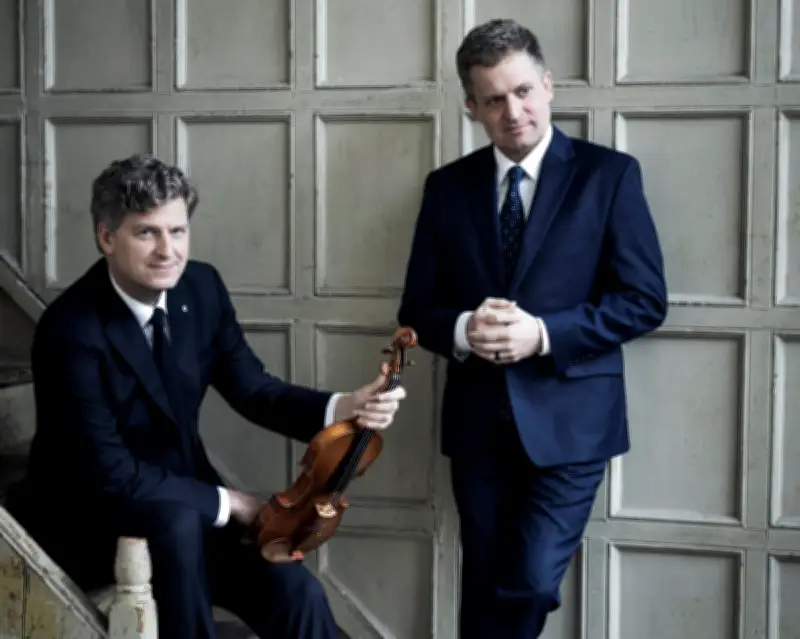
In artistic lockstep, James Ehnes and Andrew Armstrong deliver performances that exude an effortless rightness in their recording of Brahms's three violin sonatas. The Canadian violinist and American pianist, musical partners for over three decades, bring assurance and grace to these works written between 1879 and 1888, during Brahms's creative prime.
Emotional Span and Structural Complexity
The three sonatas cover a considerable emotional range, from the lyrical, ultimately wistful G major with its rain-dappled finale to the structural complexities of the fiery D minor. The central A major sonata, good-natured yet intimate, stands as one of the composer's sunniest and most endearing works.
A Partnership Forged in Youth
Ehnes and Armstrong met in Winnipeg in 1991 when the violinist was 15 and the pianist 17. The longevity of their partnership pays dividends in performances that feel instinctively right. In the opening of the G major, Armstrong provides the wind beneath Ehnes's wings, the two musicians in artistic lockstep, even if the recorded sound favors the violin's brightness. Pacing is assured, phrasing shapely. The gently pattering finale, with Ehnes's graceful double-stopping, suggests remembrances of times past.

Conversational Tone in A Major
In the A major sonata, the tone is ideally conversational, readily evoking 35 years of friendship. A soaring andante frames a lightly sprung ländler followed by a gently questioning allegretto grazioso. Technical assurance marks the impassioned D minor sonata, where Armstrong's chuntering rhythms counterpoise full-blooded violin acrobatics.
Comparison with Classic Accounts
Throughout, Ehnes avoids the leaner, edgier approach of artists like Alina Ibragimova or Anthony Marwood. Instead, his seamless partnership with Armstrong invites comparison with the classic accounts of Josef Suk and Julius Katchen.