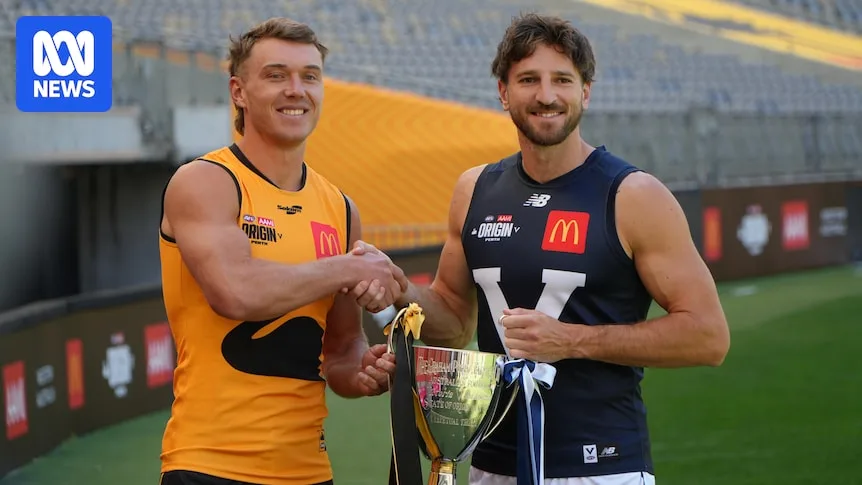
After more than a quarter of a century, State of Origin football is set to return to the AFL calendar, reigniting one of the sport's fiercest rivalries. A capacity crowd at Perth Stadium and millions watching at home will witness the clash between Western Australia and Victoria, two states with a deep history in representative football.
Interstate football once defined the passion of Australian rules, with South Australians chanting 'Kick a Vic' and Western Australians celebrating triumphs over Victoria. The first known intercolonial match was played in 1877, and by the late 1800s, these contests helped cement Australian rules as the dominant code in several states. South Australia's decision to adopt Victorian rules in 1879, after a debate between rugby and Australian rules, was influenced by the desire for interstate competition.
The decline of State of Origin began in the late 1990s, as club priorities, travel demands, and injury concerns led to star players withdrawing. In 1998, only nine of the AFL's top 25 players originally named for interstate teams actually played. Crowds dropped, and TV audiences fell below regular home-and-away games. The last match in 1999 saw just 26,000 fans at the MCG for a scrappy game between Victoria and South Australia.

The revived match is being played outside the regular season, a move that reflects modern realities. Victorian coach Chris Scott has acknowledged that State of Origin is no longer the pinnacle and should not affect club priorities. Extended benches and proposed minute restrictions aim to protect players and ensure elite talent participates, though the February timing and preseason conditions may limit the spectacle.
Despite these challenges, the return of State of Origin draws on the passion of the past. For many fans, especially those who grew up before the AFL became a national competition, interstate football represented the highest stage, where careers were made and fierce rivalries played out in state colours.