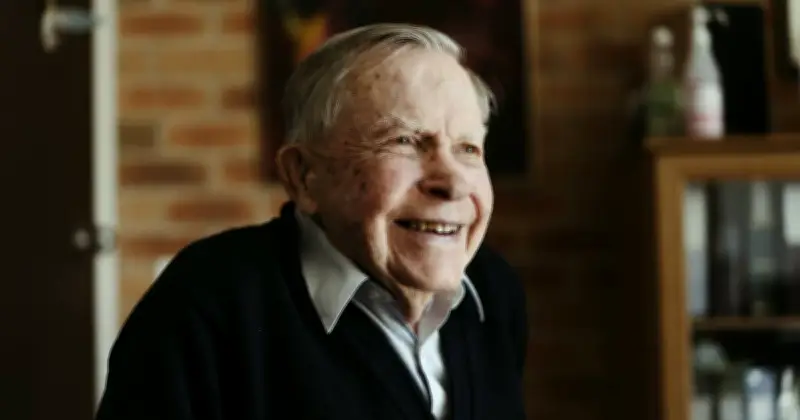
Emeritus Professor Malcolm Whyte, a distinguished scientist and former director of the John Curtin School of Medical Research at the Australian National University (ANU), has died at the age of 105.
A Life Dedicated to Science
Professor Whyte's career spanned over seven decades, during which he made significant contributions to medical research, particularly in the fields of cardiovascular disease and clinical science. He was born in 1919 and began his academic journey at the University of Sydney, where he earned his medical degree. His early work focused on understanding blood clotting and its role in heart attacks and strokes.
Leadership at ANU
In 1968, Professor Whyte was appointed director of the John Curtin School of Medical Research, a position he held until 1977. Under his leadership, the school expanded its research into immunology, genetics, and neuroscience. He was known for fostering a collaborative environment and mentoring young scientists.

After retiring as director, he continued as an emeritus professor, actively engaging in research and writing. He published numerous papers and was a strong advocate for science education and public health.
Recognition and Legacy
Professor Whyte received many accolades, including being appointed a Member of the Order of Australia (AM) in 1981 for his services to medical research. He also served on various national and international committees, shaping health policies.
His passing has been mourned by the scientific community. ANU Vice-Chancellor Professor Brian Schmidt said, "Professor Whyte was a giant in Australian science. His contributions to medical research and his dedication to excellence have left an indelible mark."
Personal Life
Professor Whyte is survived by his children and grandchildren. His wife predeceased him. He was known for his sharp intellect, humility, and passion for knowledge, which he maintained well into his centenarian years.
In his final years, he lived in Canberra, where he remained active in academic circles. His legacy continues through the many researchers he inspired and the institutions he helped build.