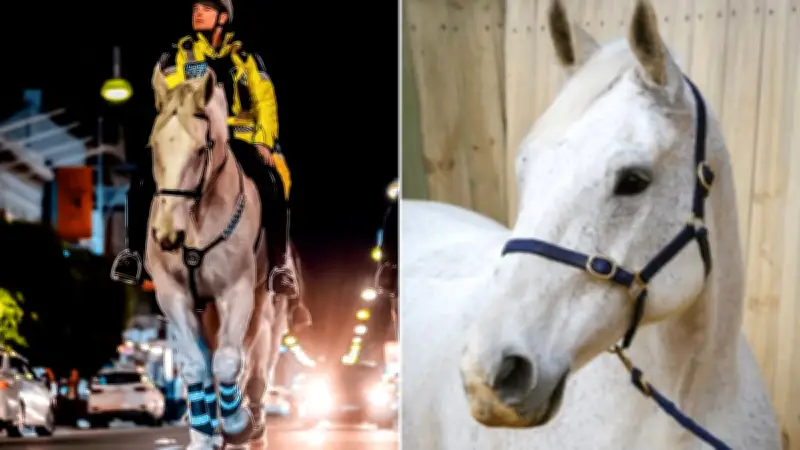
South Australia Police (SAPOL) has confirmed that one of its most decorated police horses, Vulcan, will be cloned following his death last year. The project, formally approved by the commissioner in January, aims to preserve the bloodline of the 23-year-old horse using advanced reproductive technology.
Vulcan passed away in 2024, and vets immediately collected a tissue sample, which was transported to Catalina, a specialist equine breeding facility in New South Wales. There, his genes have been safeguarded using state-of-the-art reproductive technology in preparation for cloning.
Why clone a police horse?
A SAPOL spokesperson explained that policing with horses is highly specialised, and sourcing suitable horses with known attributes and grey colouring is challenging. “Cloning explores the opportunity to preserve exceptional service traits in identified horses necessary for public safety and replicates existing genetics. There’s no modification or enhancement within the process,” the spokesperson said.

The genetic sample has been fully processed and securely stored. SAPOL and Catalina will begin embryo creation later this year, with an embryo transfer to a recipient mare planned for spring or summer. The program aims to produce one foal, which will automatically join the Mounted Operations Unit for raising and training. “The genetics ensure it will be the same colour – grey,” SAPOL noted.
Cost and feasibility
The cost of the project remains unknown, but a spokesperson told 7NEWS.com.au it is funded within SAPOL’s existing horse acquisition budget. Cloning horses is not new; it is favourable among polo ponies in Australia to maintain ideal temperaments and height. The first horse cloned in Australia, born in 2018, was a collaboration between local and Argentinian polo institutions. The cost of cloning a horse is around $50,000, with a high success rate of producing a live foal.
Vulcan’s legacy
For almost two decades, Vulcan—standing 18.1 hands high and weighing about 860 kg—was a towering presence in the Mounted Operations Unit. Even as a young three-year-old, he displayed an exceptionally calm temperament. His operational record included general patrols, search and rescue, public order deployments, and ceremonial duties. He became one of the most recognisable police horses in South Australia.
During his service, he participated in nine Christmas pageants, nine Anzac Day parades, 31 protests, 52 graduations, and more than 3,000 patrol hours. “P.H. Vulcan was the flagship of the unit. His calm presence and quiet and gentle demeanour made him a favourite with everyone who met him. He truly was a gentle giant,” the spokesperson said.
Earlier this year, Vulcan was posthumously awarded the Australian Animal Distinguished Service Medal—the first police horse and first non-Defence animal in Australia to receive the honour. His death last year deeply affected officers. “Staff of the Mounted Operations Unit and SAPOL more broadly were truly saddened. We form a close bond and partnership with the horses… they become comrades to us, so when we lose one of them, it greatly impacts members,” they said.
Future of cloning in SAPOL
SAPOL says cloning may become part of its long-term strategy to preserve exceptional service traits. “P.H. Vulcan possessed exceptional traits and we would like to carry on those traits. Cloning technology provides this opportunity.” The Mounted Operations Unit currently has 32 operational horses. Catalina was approached for comment.