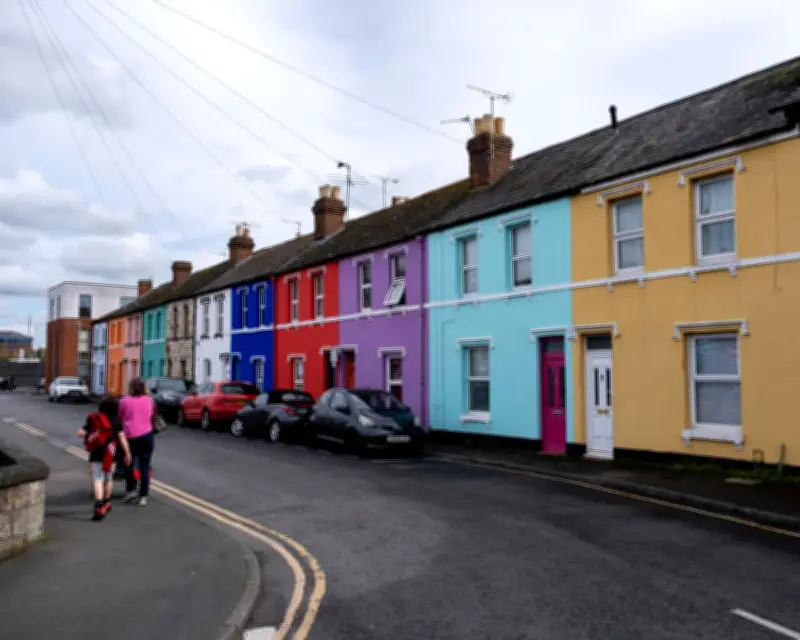
UK house prices unexpectedly rose in June, driven by safe-haven demand amid escalating geopolitical tensions with Iran, according to the latest Halifax House Price Index.
June Price Rise Defies Expectations
Halifax reported that average UK house prices increased by 0.3% month-on-month in June, reaching a new record high of £294,845. This defied economists' forecasts of a 0.2% decline, as fears of a potential war with Iran drove investors toward tangible assets like property.
On an annual basis, prices were up 2.1% compared to June 2025, accelerating from the 1.8% annual growth recorded in May. The average price now stands £6,000 higher than a year ago.

Geopolitical Tensions Boost Safe-Haven Demand
Halifax mortgages director Amanda Bryden said: 'The property market has shown remarkable resilience in the face of global uncertainty. The escalation of tensions in the Middle East, particularly the recent confrontation with Iran, has prompted some buyers to view bricks and mortar as a safe haven for their wealth.'
Bryden added that while the broader economic outlook remains clouded by the conflict, the immediate impact has been a modest boost to demand, particularly in southern England and London, where international buyers are most active.
Regional Variations and Market Outlook
Regionally, the strongest price growth was seen in the South East, where prices rose 0.7% in June, while London saw a 0.5% increase. Northern Ireland and Scotland recorded more modest gains of 0.2% and 0.1% respectively. Wales was flat, and the North East saw a slight decline of 0.1%.
Despite the monthly rise, Halifax cautioned that the market faces headwinds from rising mortgage rates, as lenders price in higher risk premiums due to the Iran situation. The average two-year fixed mortgage rate has climbed to 5.8%, up from 5.4% in May.
Impact of Iran Conflict on Housing Market
The conflict with Iran, which escalated after a series of naval incidents in the Strait of Hormuz, has caused oil prices to spike and stock markets to tumble. However, the UK property market has benefited from a flight to safety, with some investors diverting funds from equities into real estate.
Bryden noted: 'While the geopolitical situation is deeply concerning, we are seeing a pattern where property is perceived as a stable asset during times of turmoil. This is particularly evident in prime central London, where cash buyers from overseas have increased their activity.'
However, she warned that if the conflict persists, the economic fallout could eventually weigh on household finances and dampen housing demand later in the year.
Comparison with Other Indices
The Halifax data contrasts with recent figures from Nationwide, which showed a 0.1% decline in June. The discrepancy highlights regional differences and the volatility in the market amid global events.
Overall, the UK housing market remains in a state of flux, with geopolitical risks adding a new layer of uncertainty. For now, the safe-haven effect has provided a temporary lift, but the medium-term trajectory will depend on how the Iran situation evolves and the Bank of England's response to inflationary pressures.