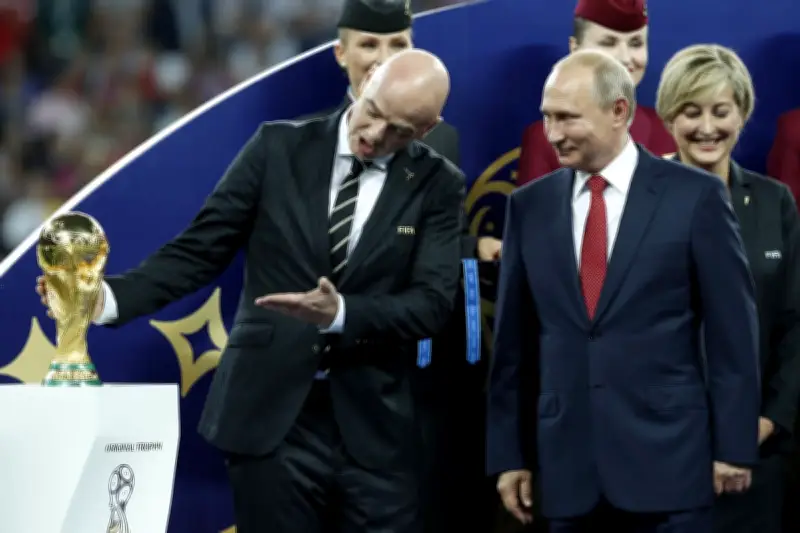
European football's governing body UEFA, along with the International Olympic Committee (IOC) and FIFA, have confirmed that the suspension of Russian national teams and clubs from international competitions will remain in place. The decision, announced on Wednesday, comes as Russia's military offensive in Ukraine continues into its second year.
Continued Suspension of Russian Teams
UEFA stated that no Russian teams will be allowed to participate in its competitions for the 2026-27 season. This includes the men's and women's national teams, as well as club sides. The ban extends to Russian officials and representatives, who are prohibited from attending UEFA congresses or holding positions within the organization.
FIFA, the global football body, has similarly extended its suspension of the Russian Football Union (RFU). The Russian national team will remain barred from World Cup qualifiers and other international fixtures. The IOC has also reinforced its sanctions, recommending that international sports federations exclude Russian and Belarusian athletes and officials from events.

Reasoning Behind the Ban
The governing bodies cited the ongoing conflict and Russia's failure to adhere to the Olympic Truce and principles of peace. According to a UEFA spokesperson, "The continued aggression against Ukraine violates the fundamental values of sport and international law. We stand in solidarity with the Ukrainian football community." The IOC echoed this sentiment, stating that the sanctions are necessary to protect the integrity of international sport.
Since the invasion began in February 2022, Russian teams have been largely isolated from global competition. The current bans have been renewed multiple times, with no indication of a near-term reversal.
Impact on Russian Football
The exclusion has had a significant impact on Russian football. The national team has not played a competitive match since November 2021, and clubs have been unable to participate in European tournaments. The RFU has explored legal avenues, including appeals to the Court of Arbitration for Sport (CAS), but has so far been unsuccessful in overturning the bans.
Some Russian officials have criticized the decision, arguing that sport should remain apolitical. However, UEFA and FIFA maintain that the measures are a direct response to the violation of international law and the humanitarian crisis in Ukraine.
Broader Context of Sports Sanctions
The bans are part of a wider set of sanctions imposed by international sports bodies on Russia and its ally Belarus. In addition to football, Russian athletes have been excluded from many Olympic sports, including athletics, swimming, and gymnastics. The IOC has allowed individual Russian athletes to compete as neutrals under strict conditions, but team events remain off-limits.
The decision has drawn mixed reactions. Ukrainian officials have praised the continued sanctions, while some international voices have called for a reevaluation, citing the potential for dialogue. Nevertheless, the current stance remains firm, with UEFA, FIFA, and the IOC reiterating their commitment to upholding the Olympic Charter and condemning the war.