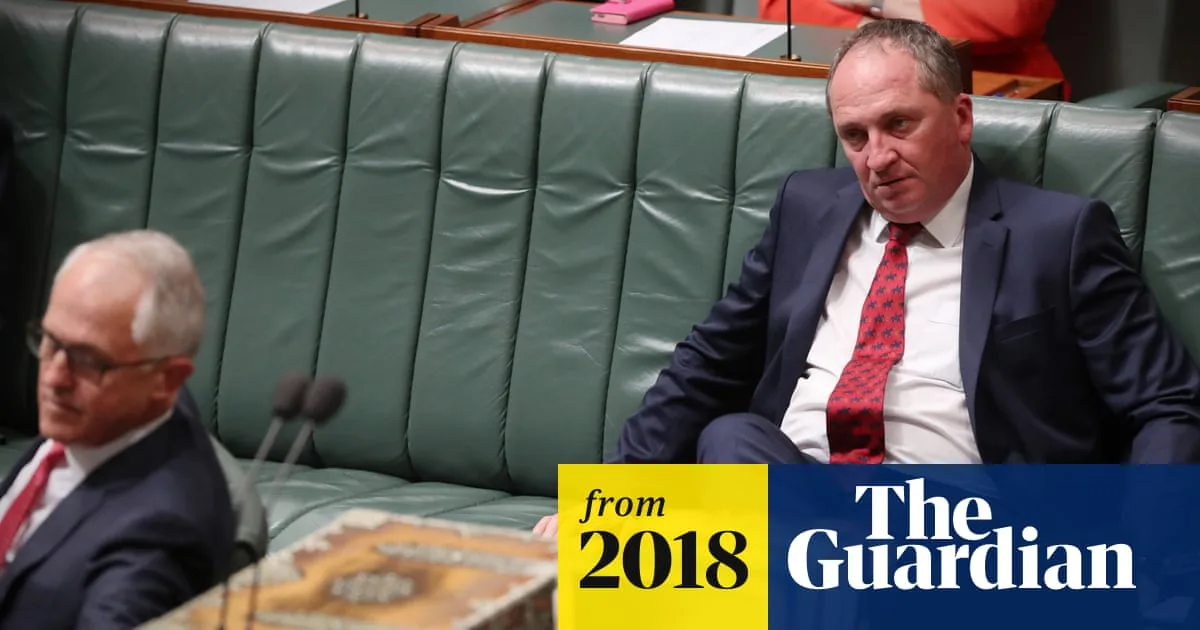
A new Newspoll reveals that 65% of voters believe Barnaby Joyce should step down as leader of the Nationals following a week of controversy over his private life and public clashes with Prime Minister Malcolm Turnbull. The survey of 1,632 voters also found that a third think Joyce should quit parliament entirely.
The negative poll comes as Joyce takes personal leave, with colleagues set to gauge sentiment in their electorates before returning to Canberra next week. The controversy has coincided with a five-point drop in Turnbull's approval rating, though most poll movements are within the margin of error. Labor leads the Coalition 53% to 47% on a two-party-preferred basis, similar to the Guardian Essential poll's result of 54% to 46%.
The turmoil began with confirmation of Joyce's marriage breakup and his relationship with former staffer Vikki Campion, who is pregnant. Some Nationals considered moving against him, deeming it unsustainable for a conservative party, but the rebellion faltered within 24 hours. Turnbull then publicly stated Joyce would not serve as acting prime minister during his US visit, with Senate leader Matthias Cormann taking the role instead. Turnbull also called on Joyce to consider his position, citing the distress caused to his family, and announced a ban on ministers having sexual relationships with staff.

Joyce retaliated by accusing Turnbull of being 'inept' and 'unnecessary.' The two leaders met privately over the weekend to mend their relationship. In a TV interview, Turnbull described their relationship as 'frank' and expressed no regret for his public criticism, saying he believed Australians wanted to hear his heartfelt views. The interview also touched on the government's poor opinion poll performance, a sensitive topic given Turnbull used similar polling to oust Tony Abbott in 2015.