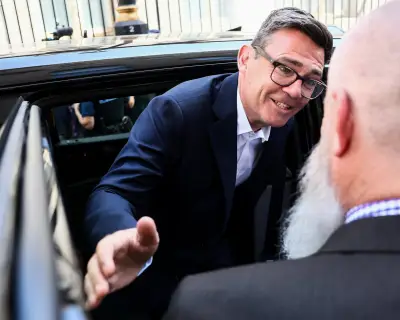
In a bold departure from Labour's conventional foreign policy approach, Greater Manchester Mayor Andy Burnham delivered a speech that amounted to a crash course in hardcore geopolitics. The address, which has stirred debate within political circles, signals a potential reorientation of the party's stance on global affairs, emphasizing national interests and strategic pragmatism over traditional internationalist ideals.
Burnham's Geopolitical Vision
Speaking at an event in Manchester, Burnham outlined a foreign policy framework rooted in realism. He argued that the UK must prioritize its own security and economic interests in an increasingly volatile world. "We cannot afford to be naive in a world where power politics is the order of the day," Burnham stated, according to a transcript of his remarks. His speech touched on issues ranging from China's rise to the war in Ukraine, urging a more assertive and self-interested British posture.
Burnham's comments mark a significant shift from the party's historical emphasis on multilateralism and soft power. He criticized what he called "wishful thinking" in foreign policy, calling for a harder-edged approach that includes bolstering defense spending and forging strategic alliances based on mutual benefit rather than shared values alone.

Reactions and Implications
The speech has drawn mixed reactions. Some Labour MPs have welcomed Burnham's willingness to tackle tough geopolitical questions, while others worry it could alienate the party's traditional base. "This is a necessary reality check," said one Labour source who spoke on condition of anonymity. "But we must be careful not to abandon our principles."
Burnham's intervention comes at a time when Labour is seeking to define its foreign policy identity ahead of the next general election. The party has often been criticized for lacking a clear vision on global affairs, and Burnham's speech may be seen as an attempt to fill that void. However, it also risks creating internal divisions, as some members remain committed to a more idealistic approach.
Political analyst Dr. Sarah Jenkins of the University of Manchester commented, "Burnham is tapping into a growing sentiment that the UK needs to be more hard-nosed in its foreign relations. Whether this resonates with the broader electorate remains to be seen."
A New Direction for Labour?
Burnham's speech could signal a broader shift within Labour towards a more pragmatic and less ideological foreign policy. By emphasizing national interests and strategic calculus, he aligns with a tradition of geopolitical realism that has often been sidelined in British politics. His call for increased defense spending and a more cautious approach to China reflects concerns that are gaining traction across the political spectrum.
However, critics argue that such a stance could undermine the UK's commitment to human rights and international law. "We must not sacrifice our values for the sake of realpolitik," warned a spokesperson from the Campaign for Nuclear Disarmament. The debate highlights the tension between idealism and realism that has long divided the Labour Party.
As Burnham continues to position himself as a potential future leader, his foreign policy pronouncements will be closely watched. For now, his crash course in hardcore geopolitics has injected a new urgency into the conversation about Britain's role in the world.