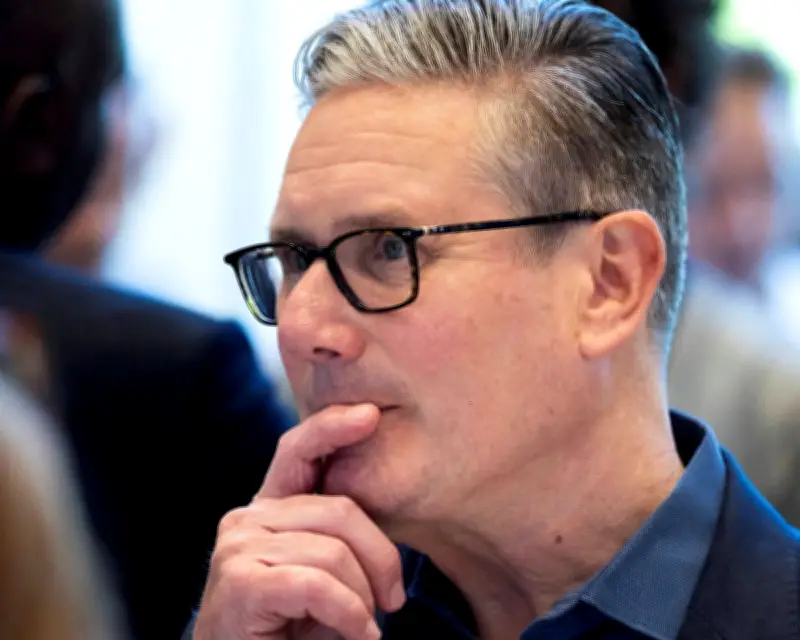
UK Prime Minister Keir Starmer is expected to announce on Monday that he will step down, following overwhelming pressure from Labour MPs to make way for Andy Burnham to become party leader and prime minister.
Government Confirms Political Realities
Business Secretary Peter Kyle, speaking for the government on Sunday, refused to comment on Starmer's specific plans but acknowledged the prime minister was aware of the "political realities" and would act in the country's best interest. "I don't want to come on here and be delusional that there is no process, there are no forces at work which are challenging the prime minister as leader – that is clearly the case," Kyle told the BBC's Sunday with Laura Kuenssberg programme.
Starmer and his allies had insisted for weeks, before the Makerfield byelection in which Burnham secured a return to Westminster, that they would fight a leadership challenge. Downing Street reiterated this on Sunday, pointing to Starmer's comments to reporters on Friday vowing to fight any challenge. However, amid hopes on both sides of avoiding rancour, no cabinet ministers have publicly called for Starmer to go. Allies of Foreign Secretary Yvette Cooper declined to comment on reports she had privately urged the PM to step aside.

Timetable for Departure Expected
The widespread assumption in government is that Starmer will move on Monday. "I would expect him to do the right thing for the country, with some sort of timetable for departure, most likely around the autumn," one source said. Kyle said he did not know what the next few days would entail but presented Starmer as thinking carefully about his future and how to avoid damaging the national interest.
Kyle said he had spoken at length to Starmer on Friday: "He was very mindful of the interests of the country, and in that conversation he repeatedly said to me and asked my advice on what I believe the country wanted at this moment in different circumstances." Refusing to say what advice he had given, Kyle added: "We are a tight group of people, and we are now facing a period of political uncertainty, and we need to find a way to get through this that puts the country first. This is what we are trying to do."
Leadership Contest Uncertain
Kyle, a close friend of former Health Secretary Wes Streeting who resigned last month and pledged to challenge for prime minister, was asked whether he wanted a full contest rather than a coronation for Burnham. Kyle said contests were "better wherever possible, that needs to be balanced with the needs of maintaining authority of a party." It remains unclear whether Streeting or another candidate would challenge Burnham. Some in Labour believe a contest would help test Burnham, while others worry it could gridlock the government for weeks.
Streeting has pledged to seek the top job and says he has sufficient backers, but allies of Starmer and Burnham are sceptical. His candidacy becomes less likely if wavering Labour backbenchers swing behind Burnham. Kyle urged Labour to "learn the lessons of the Tories and make sure that any change that may or may not happen is done in a functional way, and in a way that keeps the government focused on the needs of the people." In a veiled warning, he added that the Conservatives had shown "whenever they saw a challenge in their party, they always thought that changing the person at the top would fix everything, and that palpably, patently, is not the case."
Burnham's Growing Support
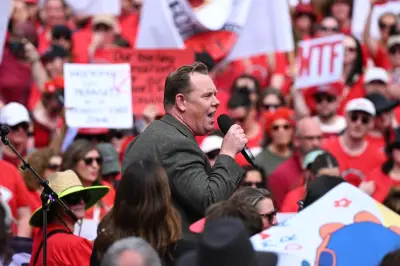
After winning the Makerfield byelection with a 9,000-plus majority and more than 50% of the vote, Burnham's team believed they had the support of about 200 Labour MPs, roughly half the parliamentary party. That number has since increased, with Burnham increasingly confident of a coronation without a contest, assuming Starmer sets a quick departure timetable. On Friday, ministers previously loyal to Starmer told him he should decide on a departure timetable by the end of the weekend or face being forced out, with a likely intervention at Tuesday's cabinet meeting.

Under Labour party rules, any MP wishing to challenge for leader needs the backing of at least 20% of the parliamentary party, or 81 MPs. Starmer's departure will make the UK's seventh prime minister in 10 years, just two years after he led Labour to a sweeping general election victory with a majority of 174 seats. His premiership has been battered by controversies and U-turns, including over winter fuel payments and the appointment of Peter Mandelson as UK ambassador to Washington. Labour has slumped in the polls, and Reform UK has led for more than 300 consecutive national polls. Many Labour MPs are convinced that without a change of leader, Nigel Farage will win the next election.