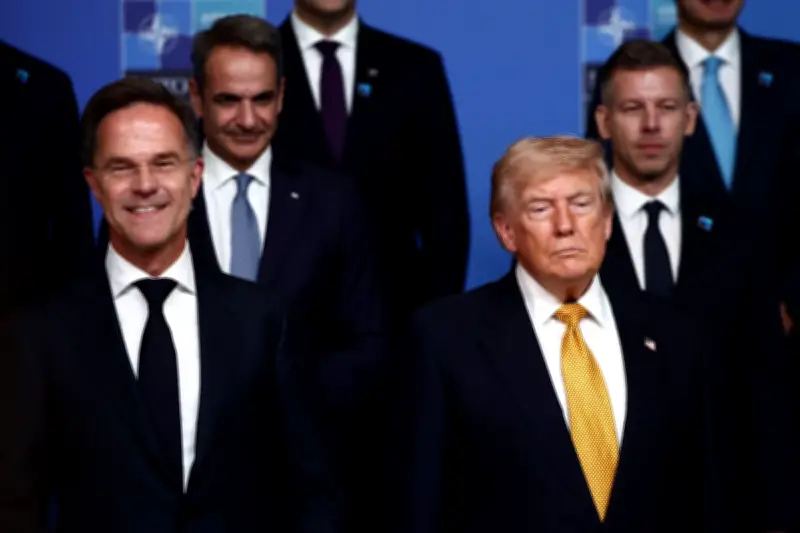
The recently concluded Nato summit exposed the real source of Donald Trump's power, according to former US labor secretary Robert Reich. In a column for Guardian US, Reich argues that Trump's influence does not come from his position as president of the most powerful nation, his Maga base, or strategic brilliance, but rather from his willingness to violate all norms, rules, and laws to accumulate wealth, power, and glory, and to wreak vengeance on those who obstruct him.
Trump's Behavior at the Nato Summit
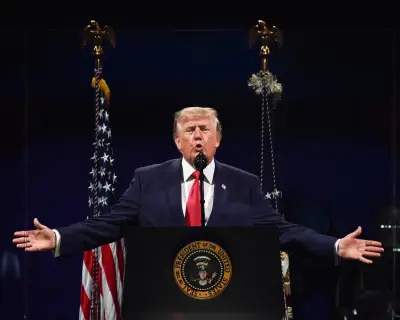
At the summit, Trump lashed out at other Nato members, expressing disappointment and questioning why the US spends hundreds of billions of dollars while allies are not reciprocating. He reiterated his desire to take over Greenland, criticized European energy and immigration policies, insulted Spain, and alarmed allies by stating that the conflict between Kyiv and Moscow does not affect the US. Despite this, other Nato leaders treated Trump with extraordinary courtesy and respect, perhaps more than any previous US president. Trump himself described the meeting as great, with a lot of love and unity in the room.
The Source of Trump's Power
Reich contends that Trump's power does not derive from the US's global standing, which has been diminished by his arbitrary tariffs, the war in Iran, and the abduction of Nicolás Maduro. Nor does it come from his Maga base, which is having second thoughts about supporting a president who involved the US in another Middle Eastern war, caused price rises, and whose administration has not released the complete Epstein files. Instead, Trump's power flows from his readiness to breach all norms, rules, and laws governing presidential conduct.

The Nato presidents and prime ministers treated Trump with deference because they fear what he might do if he does not get his way. Whether it involves Nato, Iran, the World Cup, the 2020 election, or making billions off his presidency, Trump is unconstrained by norms, rules, treaties, or laws.
Trump's Non-Ethical Approach
Reich highlights Trump's World Cup intervention, where he threatened to claim a US loss was rigged, similar to his 2020 election claims. Trump's correction from 'we'll say' to 'I'd say' reveals his disregard for collective ethical judgment. Ethics presupposes agreed-upon standards, but Trump operates without any standards. His entire approach is about winning at all costs, whatever it takes. Reich argues that Trump is not unethical but non-ethical; not immoral but amoral.
The First-Mover Advantage
Reich uses an analogy of a small town where people do not lock their doors due to an unwritten rule against stealing. The first thief who commits robberies has a huge advantage, easily entering homes. Once trust is shattered, residents must bear the cost of locks and the hassle of securing their homes. This asymmetry—small cost for the violator, large costs for others—is the essence of Trump's modus operandi. He gains wealth, power, and glory by shattering norms, leaving everyone else to pick up the pieces.
As president, Trump has shattered far bigger norms than a small-town thief, with greater personal benefit. His thuggery has paid off for himself but has damaged institutions like Nato, FIFA, and the US Department of Justice, which relied on trust that no American president would act as he has.
Conclusion
Reich predicts Trump will be remembered as the most powerful US president, but also the worst. After he is gone, the nation and the world will pay to clean up the mess, buying countless locks for endless doors and windows, and spending huge amounts of time installing and keeping them locked.