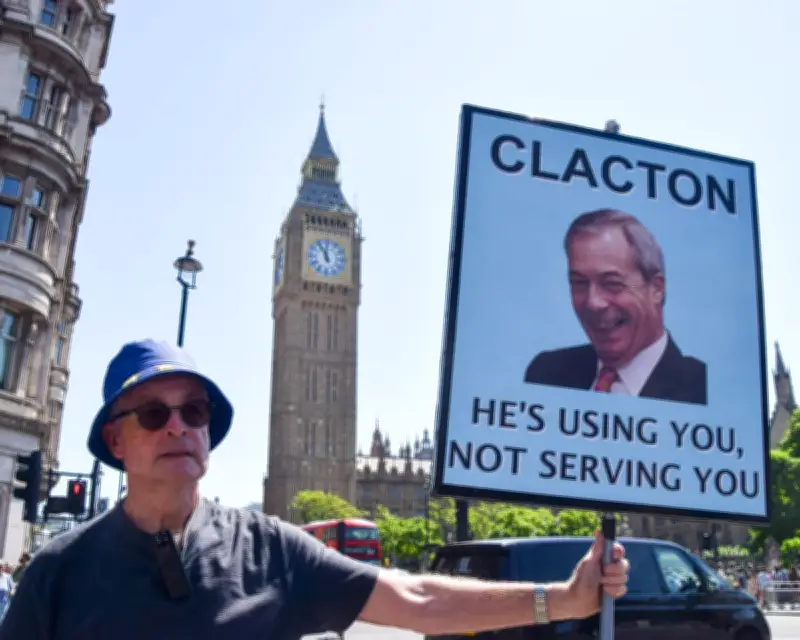
Labour MPs are preparing to rebel next week against the government's proposed political funding reforms, pushing for stricter measures including a permanent ban on cryptocurrency donations and significantly reduced campaign spending limits. The move comes amid mounting controversies over funding for Nigel Farage's Reform UK party, which has received millions of pounds in cryptocurrency donations.
Four Amendments to Tighten the Bill
MPs from the all-party anti-corruption group are rallying support for four amendments to the representation of the people bill. These amendments aim to substantially strengthen the government's original proposals. The most prominent amendment, tabled by Liam Byrne, the Labour chair of the business select committee, calls for a permanent ban on donations made in digital currencies, replacing the government's current temporary moratorium. Byrne's amendment had garnered at least 20 signatures by midday Thursday.
Byrne stated: "With each passing day, we learn new revelations about the extraordinary lengths to which Reform UK politicians will seemingly go in order to avoid proper oversight of their finances. Amendments to the representation of the people bill which my colleagues and I have tabled are vital safeguards against the wider threat that's seen £200m come flooding in to build a whole media political complex behind populists in Britain. We simply cannot afford to let our crumbling defences be undermined any further. I would urge any parliamentarian who genuinely cares about the integrity of UK democracy to back these amendments."

Lower Spending Limits Proposed
Former Labour cabinet minister Anneliese Dodds has tabled an amendment calling for a reduction in campaign spending limits from £34 million to £24.4 million, a cut of nearly one-third. Dodds commented: "We now have an arms race in funding political campaigns. The public want to see limits set at a more reasonable level."
Another amendment, from Yuan Yang, an ally of the incoming prime minister, seeks to impose limits on the amount of money a political party can hold at its formation. This follows revelations that Rupert Lowe's far-right party, Restore Britain, started with £2.5 million in the bank without disclosing the source of the funds.
Foreign Interference Checks
A fourth amendment, proposed by Mark Sewards, would introduce a new due diligence check on donations to assess whether they pose a risk of foreign interference in British democracy. Sewards' amendment aims to prevent foreign countries from using donations to undermine the UK's political system.
The push for tougher measures comes as controversy swirls around funding for Reform UK, particularly millions of pounds from cryptocurrency entrepreneurs Christopher Harborne and George Cottrell. The Guardian has reported over the past 48 hours that several transactions from both men were flagged by bankers to the National Crime Agency, with concerns raised about the true source of the money.
Farage's Response and Byelection
Nigel Farage has denied any wrongdoing and triggered a byelection in his Clacton-on-Sea constituency to demonstrate voter support. He faces no organised opposition after all major competitors declined to field candidates, promising to stand only if a parliamentary investigation prompts another byelection.
As questions over Farage's finances mount, ministers have pledged to toughen the elections bill when it returns to the Commons on 14 July. The government's amendments include a £100,000 cap on donations from expats for one year after their return to the UK. However, many Labour MPs believe these measures are insufficient and are campaigning for broader changes.
Labour MP Stella Creasy has proposed a £100,000 cap on all individual donations, though this idea has garnered less support among colleagues compared to the amendments by Byrne, Dodds, Yang, and Sewards.
A spokesperson for the Ministry of Housing, Communities and Local Government stated: "[We] will keep looking for ways to strengthen the bill as it works its way through parliament."