Employment Minister Amanda Rishworth has denied the Albanese government is increasing taxes, despite reforms expected to raise $77 billion over a decade. Speaking on Sky News Sunday Agenda, Rishworth pushed back against claims that the 2026 budget represents a tax hike.
Government Defends Tax Reforms
“We’re not upping that tax,” Rishworth said, referring to changes to capital gains tax. The government has introduced a 30 per cent minimum tax rate on capital gains, scrapping the 50 per cent discount and taxing gains adjusted for inflation instead. When asked if this effectively increases taxes, Rishworth argued it merely changes how the system works.
“What we are doing is changing the way that capital gains is calculated, and looking at what is an appropriate tax rate for that,” she said.

Treasury Estimates Show Revenue Shift
Treasury figures show Labor’s tax cuts will cost the budget $12.8 billion over a decade, while broader tax changes raise $77 billion over the same period. The government argues the extra revenue from investment property tax changes will be redirected to workers through tax relief and housing measures.
“The rebalancing of the tax system, and that extra tax that we're getting is being redirected to workers,” Rishworth said. “Workers will be better off in this country as a result of these tax changes.”
Rejection of International Criticism
Rishworth also dismissed criticism from New Zealand Prime Minister Christopher Luxon, who described capital gains taxes as a “wrecking ball tax”. She highlighted differences between the two countries’ tax systems and suggested leaders should not interfere in domestic politics.
“Well, we've got two different countries with two different tax systems. Let's be really clear, New Zealand has a different tax system to our tax system,” she said. “I would suggest that neither leaders would seek to get involved in domestic politics.”
Broken Promises Under Scrutiny
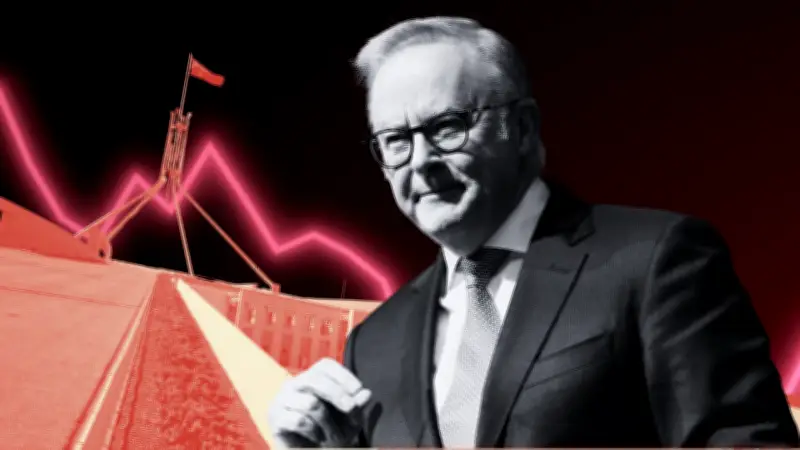
The comments follow Prime Minister Anthony Albanese’s refusal to apologise for a string of broken promises, including tax changes, at Australia’s Economic Outlook. Labor has pushed ahead with controversial reforms to replace the 50 per cent capital gains tax discount with an inflation-based model and restrict future negative gearing to newly built homes from July 1, 2027.
Albanese had previously ruled out touching negative gearing or capital gains tax before the election. The government has also broken promises on power prices, tax cuts, superannuation, and mortgage costs.
When asked by Sky News Political Editor Andrew Clennell why he couldn’t win an election by telling the truth, Albanese acknowledged the government had reversed course but argued circumstances demanded action. “We've changed our position. That's a difficult thing to do. And we understood that there would be criticism of that,” he said. “But what we couldn't afford to do is to sit back and say, well, you know, we're in a position to do something about this… but we're going to just stand still.”
Asked whether he owed voters an apology for violating their trust, the Prime Minister declined, saying, “It wasn't our position then. I'm not interested in word games, and I don't think Australian people are either. They will make a judgement.”
Polling Shows Voter Discontent
In the latest Sky News Pulse/YouGov poll, One Nation led the primary vote for the first time in history at 29 per cent, a 23-point increase from the 2025 federal election. Labor sank to its lowest-ever result of 26 per cent, down nine points, while the Coalition trailed on 20 per cent. One Nation has attracted traditional Labor voters, with 35 per cent of working-class voters intending to back Pauline Hanson’s party.
“One Nation’s surge in primary vote support has come from working-class voters who have historically favoured Labor,” YouGov Director of Public Data Paul Smith said. “Working class voters are the majority of voters in most electorates, so the battle for the working class vote between Labor and One Nation will decide the next election.”