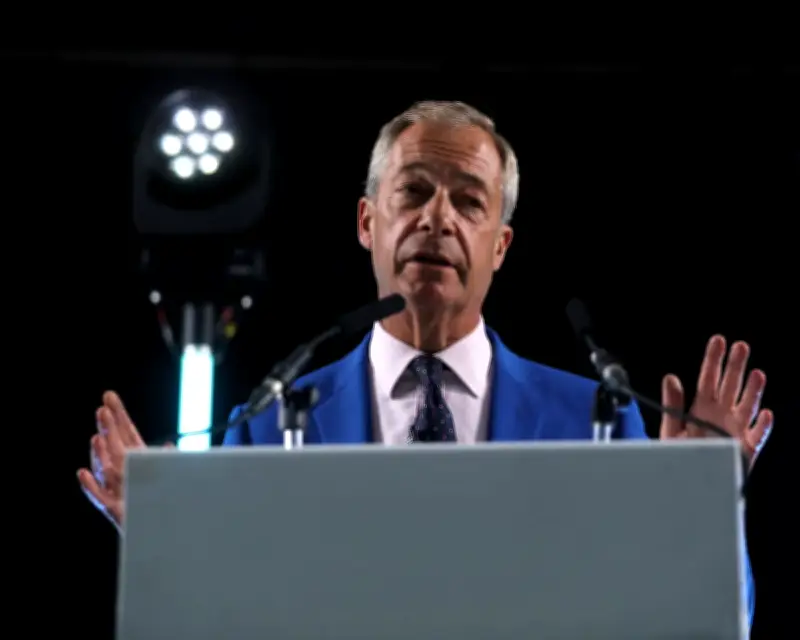
Nigel Farage, the prominent Brexit campaigner and former UKIP leader, has revealed that he has invested in gold and believes it offers a direct bullion payment method. In an interview with The Guardian, Farage stated that he has purchased physical gold bars and coins, arguing that gold provides a secure store of value and a means of payment outside traditional banking systems.
Farage's Gold Investment Strategy
Farage explained that his investment in gold is part of a broader strategy to diversify his assets and protect against inflation. He said, "I have bought gold bullion directly. It's a way of having a store of value that is independent of governments and central banks." He also noted that gold can be used as a payment method, though it is not widely accepted.
Direct Bullion Payment System
According to Farage, gold offers a "direct bullion payment" system, meaning that transactions can be settled with physical gold without the need for intermediaries like banks. He emphasized that this system is particularly useful in times of economic uncertainty. "If you have gold, you can pay for things with it directly, provided the other party accepts it," he said.

Criticism and Skepticism
Economists have expressed skepticism about Farage's claims. Dr. Sarah Johnson, an economist at the London School of Economics, said, "While gold has historically been a store of value, it is not a practical payment method for everyday transactions. The idea of a direct bullion payment system is impractical in a modern economy." Others have pointed out that gold is subject to price volatility and storage costs.
Political Implications
Farage's comments come amid ongoing debates about the role of gold in the global financial system. Some politicians and investors have advocated for a return to the gold standard, while others argue that it is outdated. Farage's investment has also sparked discussions about the transparency of politicians' financial holdings.