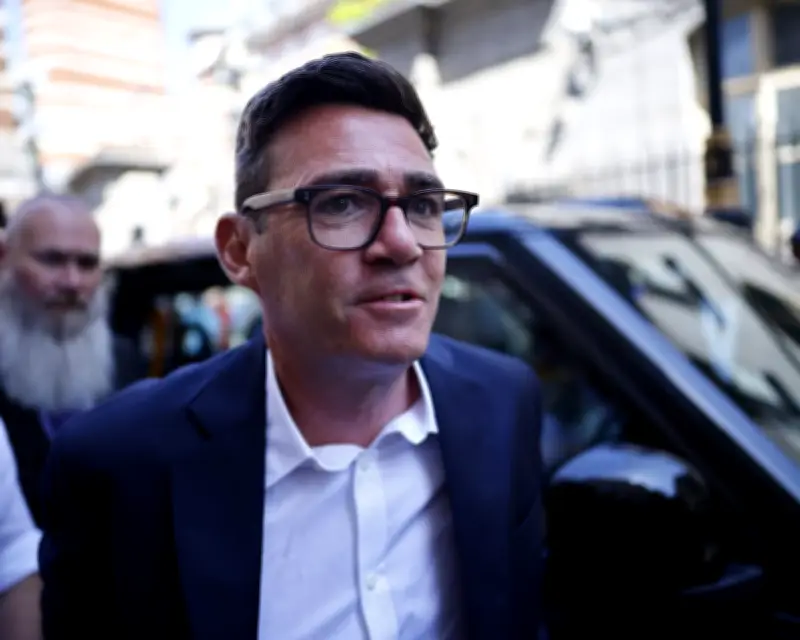
Andy Burnham, the Mayor of Greater Manchester, finds himself in a delicate balancing act as his calls for increased borrowing clash with the Treasury's stringent fiscal rules. The tension highlights the broader challenge facing regional leaders who seek to invest in infrastructure and public services amid tight national budgets.
The Borrowing Demand
Burnham has been a vocal advocate for greater borrowing powers to fund major projects in transport, housing, and clean energy. He argues that such investments are essential to level up the North of England and stimulate economic growth. However, the Treasury remains cautious, wary of adding to the national debt which has ballooned due to pandemic spending.
According to sources close to the mayor, Burnham believes that borrowing at historically low interest rates is a prudent strategy. He points to successful examples in other countries where regional governments have leveraged debt to catalyze development.

Fiscal Realities
The clash comes as the UK government grapples with its own fiscal rules, including a commitment to get debt falling as a share of GDP. Chancellor Jeremy Hunt has emphasized the need for discipline, warning that unchecked borrowing could undermine market confidence.
"We have to be responsible with the public finances," a Treasury spokesperson said. "While we support investment, it must be within a framework of fiscal sustainability."
Impact on Greater Manchester
The standoff has direct implications for Greater Manchester's ambitious plans. Burnham has proposed a £1.5 billion investment package for public transport, including bus franchising and tram extensions, as well as a housing retrofit program to improve energy efficiency. Without additional borrowing, these projects face delays or scaling back.
Economic analysts warn that the impasse could stifle growth. "Greater Manchester has the potential to be a powerhouse, but it needs the tools to invest," said Dr. Sarah Jones, an economist at the University of Manchester. "The current fiscal constraints are a straitjacket."
Political Tightrope
Burnham is also navigating political pressures. As a prominent Labour figure, he must balance his ambitions with the party's stance on fiscal responsibility. The issue is expected to feature prominently in the upcoming mayoral election, where Burnham seeks a third term.
His opponents have seized on the borrowing clash, accusing him of reckless spending. Meanwhile, some Labour colleagues privately express concern that the fight could distract from broader messaging on the economy.
Looking Ahead
Negotiations between Burnham and the Treasury are ongoing, with both sides signaling a willingness to compromise. One possible outcome is a pilot program allowing Greater Manchester limited borrowing flexibility, subject to strict conditions.
"We are exploring all options," Burnham said. "But the status quo is not acceptable. Our communities need investment now."
The resolution of this clash will set a precedent for other regional mayors seeking greater fiscal autonomy, making it a key test of the government's devolution agenda.