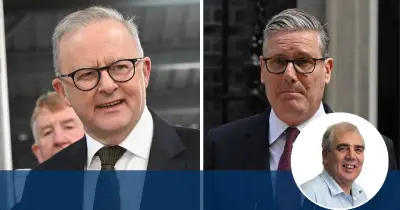
Andy Burnham, the UK's likely next prime minister, has pledged to establish No 10 North as the 'nerve centre of a rewired Britain' to oversee a sweeping devolution of power and resources across the country. In his first speech since Keir Starmer announced he was standing down, Burnham declared that the Westminster system is 'broken' and that a 'more of the same' approach would neither improve living standards nor restore public faith in politics.
Burnham's Vision for Change
Speaking at the People's History Museum in Manchester, Burnham outlined a decade of transformative change, beginning with overcoming Whitehall's resistance to devolution. He set three clear tasks for No 10 North: increasing public ownership of essential utilities such as water, energy, and housing; reindustrialising swathes of the country; and regenerating towns that have been left behind. This includes overseeing the biggest council housebuilding programme since the postwar period and ordering Whitehall to back British firms bidding for public contracts, even if it costs taxpayers more.
Addressing Cost of Living
Burnham acknowledged that 'people can't wait for ever for change,' hinting at an early cost of living support package once he enters Downing Street. 'I heard on doorsteps in Makerfield how people need a bit extra now to help with rising costs,' he said. 'I will do my very best to deliver it, and whilst not taking risks with the public finances, will seek to give Britain some breathing space as soon as I can. People need to be able to look forward to a night out or a holiday with the kids. People need hope.'

Critique of Westminster
Burnham, dressed in a dark T-shirt and jacket rather than a suit and tie, directly addressed voter skepticism: 'What hope can we have that it will be different this time? That is the question I would be asking if I was a voter right now. Westminster has not been working for people and it has not been working for a very long time. In fact, it is broken. And as a result, the country isn't where it should be. It is stuck in a rut, and clearly we can't go on like this.'
Generational Responsibility
The former Greater Manchester mayor, who served in the last Labour government, admitted his generation of politicians had not been good enough. 'Now that might matter less in a world where people's lives are getting better, but when they are not, it is dangerous and destructive of what remains of cultural trust in politics,' he said. 'We can't go through another decade like the one we just had. We need a new determination to raise living standards ... We need to change politics and we need to do it now.'
Fiscal Discipline and Cabinet Plans
Burnham reassured markets that he would stick to fiscal rules, despite suggesting last year the UK was 'in hock' to bond markets. He said his programme was backed by 'the discipline that comes from sound public finances.' However, he declined to announce key cabinet positions until closer to power, saying he wanted to establish a 'broad church' within the Labour party and reach out to other parties to find 'as much common ground as we can' for his 10-year plan.
Ending Whitehall Adversarialism
Burnham criticised Whitehall for being 'too adversarial,' with departments wasting time fighting each other. 'Let me say this very directly: the days of Whitehall fighting the devolution of power into the regions and nations are over for good,' he said. He called for a 'complete rethink' on supporting the next generation, promising to expand technical education and give every young person a 'clear path' into a reindustrialised Britain, rebalancing focus away from the university route.
Echoing Lennon's Words
Rounding off his pitch, Burnham echoed John Lennon, asking people to imagine 'hope in every heart.' 'Imagine what things could be like if we succeed. Imagine what it would feel like to live in a country wired to work for ordinary people rather than against them,' he said.