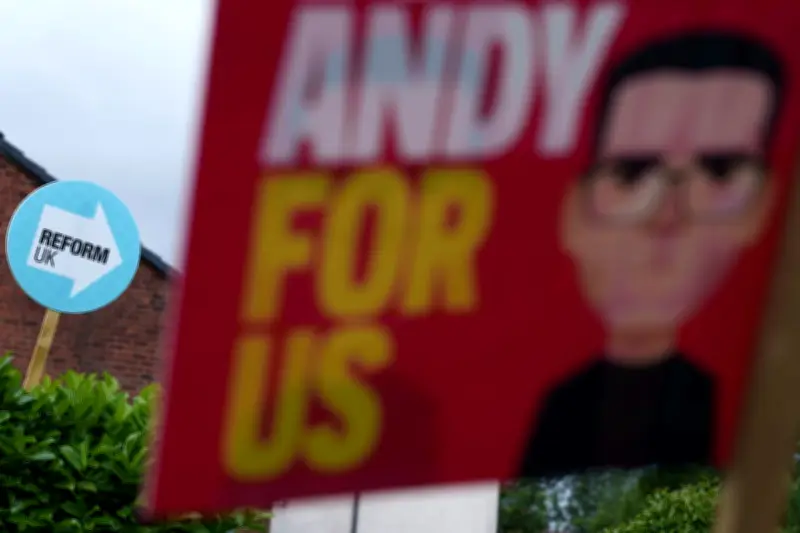
The upcoming byelection in Makerfield is shaping up to be a pivotal contest, not just for the local constituency but for the broader political landscape. At the heart of the battle is Andy Burnham, the Mayor of Greater Manchester, who is positioning himself as a standard-bearer for a moderate, inclusive politics that directly challenges the populist anger espoused by Reform UK.
A Test of Political Directions
The byelection, triggered by the resignation of the sitting Labour MP, comes at a time when the Labour Party is grappling with its identity. Burnham, a former Labour leadership candidate, represents a strand of the party that seeks to reclaim the political centre. His campaign in Makerfield is being closely watched as a potential bellwether for Labour's strategy in the next general election.
Reform UK, led by Richard Tice, has been gaining traction by tapping into voter discontent over issues such as immigration, the cost of living, and perceived political elitism. The party's platform of direct, often confrontational, rhetoric has resonated with a segment of the electorate that feels left behind by mainstream politics.

Burnham's Counter-Narrative
Burnham, however, is offering a different vision. He is emphasizing investment in public services, regional devolution, and a more compassionate approach to social challenges. His campaign has focused on listening to voters' concerns without resorting to the divisive language that has characterized Reform UK's rise.
In a recent speech, Burnham argued that the politics of anger is a dead end. He said, 'We cannot build a better future by tearing each other down. The people of Makerfield deserve a politics that offers hope, not fear; unity, not division.'
Political analysts note that the outcome in Makerfield could have significant implications. If Burnham succeeds, it could bolster the case for a moderate Labour platform. A strong showing by Reform UK, on the other hand, might encourage the party to double down on its populist messaging.
Local Issues Take Centre Stage
While national narratives are at play, local issues are also crucial. Makerfield, a constituency in Greater Manchester, has been affected by industrial decline and austerity. Voters are concerned about job security, the state of the NHS, and housing affordability. Burnham's record as Mayor, including his efforts to improve transport and attract investment, is under scrutiny.
Reform UK's candidate, meanwhile, is tapping into frustrations over immigration and the perceived failure of the political establishment to address local needs. The party has also promised to cut taxes and reduce bureaucracy, appealing to small business owners and self-employed workers.
The Stakes for Labour
For Labour, the byelection is a crucial test of its ability to hold onto its traditional heartlands while appealing to new voters. The party has been struggling to define its message under Keir Starmer's leadership, and a defeat in Makerfield could intensify internal debates about the party's direction.
Burnham's involvement adds a layer of complexity. He is not just a local figure but a potential future leader. A victory would enhance his national profile and strengthen his position within the party. A loss, however, could be seen as a rejection of the moderate approach he embodies.
Reform UK's Momentum
Reform UK has been building momentum across the country, particularly in areas that voted strongly for Brexit. The party's simple, often blunt, messages have found an audience among voters who feel ignored by the main parties. The Makerfield byelection is an opportunity for Reform UK to demonstrate that its appeal extends beyond protest votes and into serious electoral contention.
However, critics argue that the party's policies lack substance and that its rhetoric risks inflaming social tensions. Burnham has warned that the politics of anger is a 'dangerous game' that could lead to a more fragmented and polarized society.
Conclusion
The Makerfield byelection is more than just a local contest. It is a microcosm of the broader struggle between the politics of moderation and the politics of anger. Andy Burnham is betting that voters will choose hope over fear. The result will be closely watched, not just in Makerfield, but across the United Kingdom.