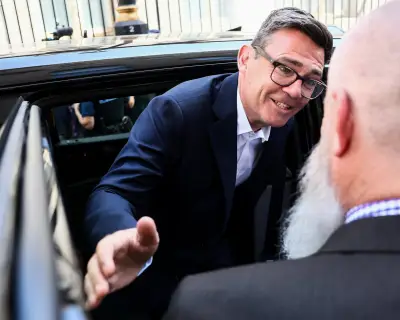
Andy Burnham, the prime minister-in-waiting, brings a promise of likability and a mission voters can believe in, but he will need all that and more to survive the challenges ahead. As the nomination period for the next Labour leader approaches, uncertainty lingers not about who will lead, but about how different Burnham can be given the constraints of the same manifesto and external headwinds.
Divergent Expectations Among Labour Factions
Old-school Blairites see Burnham as one of their own, citing his background and the appointment of James Purnell as chief of staff. The Labour right takes heart from rumours of Shabana Mahmood as chancellor and Josh Simons' role in the policy team. Meanwhile, the soft left bets on Burnham's transformation—via the Hillsborough scandal, the infected blood scandal, and the inequalities exposed by Covid—from a New Labour careerist to a new kind of thinker. However, as Zoe Williams notes, "they can't all be right."
The Meaning of 'Good at Politics'
Everyone agrees Burnham will be better at the politics than his predecessor, but what does that mean? It could refer to his genuine public appeal, his ready-made parliamentary power base, his ability to cooperate across party lines, or his capacity to deliver speeches that sound sincere. According to Williams, authenticity is key: "We feel words are genuinely meant when they sound as if you wrote them yourself." She contrasts Burnham with figures like Boris Johnson and Jeremy Corbyn, who had authenticity, and David Cameron and Keir Starmer, who lacked it.

The Challenge of Authenticity and Radicalism
Authenticity often requires either a disregard for consequences or a readiness to face them—being a chancer or a radical. Radicalism means thinking beyond current allowances, but distinguishing a charlatan from a radical only becomes clear when their pronouncements are tested. Williams warns that a prime minister's ability to hold faith without ego-overdrive may not be evident until after leaving office.
Internal Party Dynamics and Leadership Tests
Inside the party, Burnham must navigate classic political challenges: distinguishing loyal MPs from those supporting him for winning, bringing along dissenters without brute authority, delegating without creating rival fiefdoms, making decisions, and withstanding unpopularity while staying receptive to critique. The grimy aspects of politics—ruthlessness, inconsistency, low cunning, dishonesty—create a contradiction: survival requires guile, but too much sinks leadership, as seen with Johnson.
Mission Over Politics
Williams argues that Starmer's downfall was not a lack of base nature but an absence of mission. Burnham promises a mission, and when we say he is "good at politics," we cannot know if he will realise that promise, but at least he knows he is making it. She concludes: "'Good at politics' will never make a legacy, but it can make a start."