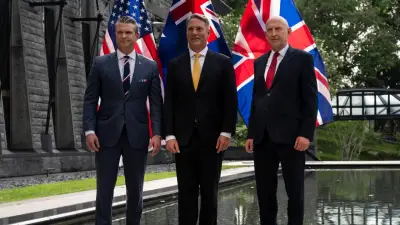
The AUKUS agreement, a landmark defence pact between Australia, the United Kingdom, and the United States, has been hailed as a cornerstone of Australia's future security. However, as the costs become clearer, many are asking: is it really value for money?
The Price Tag
Estimates suggest the nuclear-powered submarine program will cost Australia upwards of $368 billion over the next few decades. This staggering sum has raised eyebrows, especially when compared to other national priorities such as healthcare, education, and infrastructure.
Opportunity Costs
Every dollar spent on submarines is a dollar not spent elsewhere. Critics argue that Australia's defence needs could be met more affordably with a mix of conventional submarines, long-range strike capabilities, and enhanced cyber defences. The AUKUS deal, they say, locks Australia into a single, expensive technology path.

Geopolitical Considerations
Proponents of AUKUS argue that the strategic benefits justify the cost. In an era of great power competition, particularly with China's assertiveness in the Indo-Pacific, having access to advanced nuclear submarine technology is seen as a game-changer. It deepens Australia's alliance with the US and UK and provides a credible deterrent.
Industrial and Workforce Challenges
Building and maintaining a nuclear submarine fleet requires a skilled workforce and industrial base that Australia currently lacks. The government has pledged to invest in training and infrastructure, but these efforts will take years to materialise. Delays and cost overruns are common in such complex projects.
Alternative Views
Some defence experts suggest that Australia could achieve similar strategic outcomes by investing in non-nuclear options, such as advanced conventional submarines, unmanned underwater vehicles, and improved intelligence, surveillance, and reconnaissance (ISR) capabilities. These alternatives might offer more flexibility and lower costs.
Furthermore, there are concerns about sovereignty and dependency. Relying on US and UK technology for such a critical capability could limit Australia's operational independence.
Conclusion
The AUKUS agreement represents a significant commitment for Australia. Whether it is value for money depends on one's assessment of the threat environment and the effectiveness of alternative defence strategies. What is clear is that the debate is far from over, and the Australian public deserves a transparent discussion about the trade-offs involved.