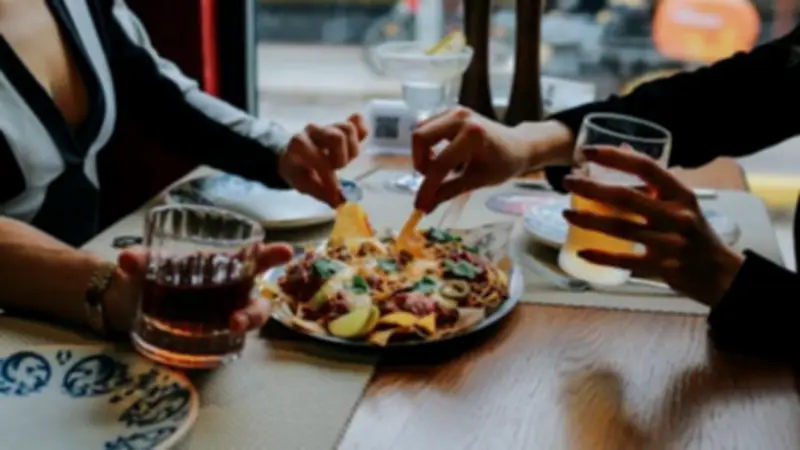
Have you ever wondered why savoury foods like chips, nachos and salted nuts go so well with a beer or glass of wine? And why sometimes you feel an insatiable appetite for junk food while drinking? Our new study examined the diets and alcohol intake of Australians to find out why.
Alcohol is packed with energy, but also stimulates appetite
We found alcohol may lead you to eat more unhealthy foods by amplifying a biological drive for protein.
Protein craving
Our previous work showed that humans and other animals have a dedicated appetite for protein. We specifically crave savoury, protein-rich foods and avoid sweet foods when our body needs protein. Protein craving and sweet avoidance is signalled to the brain by a hormone called FGF21. The liver releases this when the body detects a shortage of protein.

Drinking alcohol causes the release of FGF21, stimulating a hunger for protein. This explains why alcohol is paired with food across many cultures: a glass of bubbly before dinner, wine with the meal. Alcoholic drinks stimulate the protein appetite and, in this way, enhance the pleasure of eating. Scientists call this the “aperitif effect”, and have shown it’s directed towards savoury foods.
‘Protein decoys’ don’t satisfy our hunger
But not all savoury foods are alike. The main sources of savoury flavour used to be protein-rich foods like meat, seafood, poultry and pulses. However, ultra-processed foods don’t fit into this category. Today, industrial food systems produce many foods with added savoury flavouring that are low in protein and high in fat and carbohydrates, such as chips, savoury crackers, pizzas and hot dogs. We have called such foods “protein decoys”: they deliver the sensory cues typically associated with protein-rich foods but instead provide energy-rich fats and carbs.
This means you may overeat
In our new study, we found alcohol consumption was linked to a greater intake of savoury foods. But the effects on total energy intake varied depending on foods eaten. When savoury whole foods such as lean meat, poultry, or pulses were chosen, protein intakes were high, but calorie intakes weren’t elevated, despite the high energy content of alcohol. But when diets were rich in protein decoys – including savoury ultra-processed foods and fatty meats – energy intakes were higher than normal, risking weight gain.
Even without alcohol, diets high in ultra-processed foods are associated with excess energy intake and weight gain. Many factors contribute to this, including the low protein content of ultra-processed foods. More needs to be eaten to satisfy the body’s protein target, a mechanism called “protein leverage”.
Still feel like pizza at the end of a big night?
That’s why, after a night of salty snacks, you might still have room for a pizza or kebab, or wake up craving a fry up. Our new study shows that combining alcohol with ultra-processed foods can increase energy intake, both directly through the energy alcohol contributes and through the increased appetite for protein.
How we studied this
We modelled how FGF21, alcohol and protein appetite interact with diets rich in either processed or unprocessed foods. We tested our model using detailed daily dietary records of 9,337 adults from the Australian Adult Health Survey, one-third of whom reported drinking alcohol on the day of the survey. This approach, called mechanistic ecological modelling, allows us to examine how physiological mechanisms discovered in experimental research influences behaviour and potentially health outside of the experimental lab, in the real world.
How can you avoid the alcohol-junk food trap?
Australia has among the highest intakes of alcoholic drinks and ultra-processed foods – and obesity. If you drink alcohol regularly, recognise the accompanying savoury craving for what it is: your body seeking protein. Answer this by eating savoury protein-rich whole foods such as lean cold meats, roasted chickpeas, eggs or seafood. Don’t be deceived by fat- and carb-rich protein decoys that trick your brain into thinking it’s eating protein. This will just leave your powerful protein appetite unsatisfied.