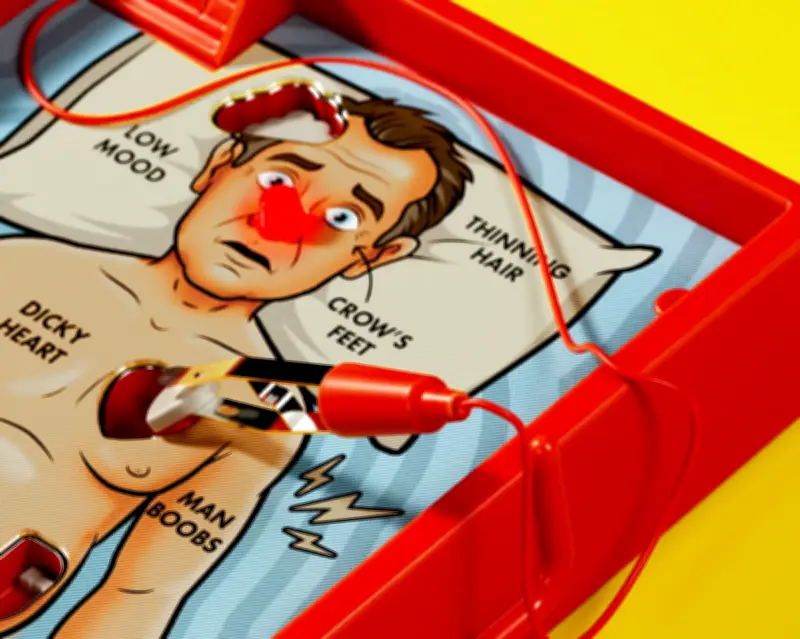
It can feel like everything is catching up with you in middle age. From man boobs to baldness, here is everything you wanted to know about midlife wellness … but were too male to ask. Medical, health and diet experts offer a midlife MOT.
Diet
According to dietician Rick Miller: “By the time a man hits his mid-40s, several physiological changes are already under way. Testosterone drops at around 1-2% annually from the mid-30s, insulin sensitivity decreases and the liver’s capacity to process certain nutrients changes. The diet that kept a man lean and energetic in his 30s simply stops working.”
Men’s metabolism also tends to slow during midlife. Miller says this isn’t down to ageing itself, but the loss of muscle that tends to accompany it – so dieting isn’t the answer. “Restricting calories – particularly if it comes at the expense of protein – simply accelerates muscle loss, which further slows metabolism, creating exactly the cycle men are trying to escape,” he says.

A better approach is to focus on increasing protein intake, alongside strength training in the gym. “The latest research suggests men over 40 need to eat between 1.6g and 2.2g of protein per kilogram of body weight a day to preserve the metabolic engine that regulates blood glucose, supports hormonal function and determines how well a man ages. Men should also limit refined carbohydrates, such as bread and pasta, to stabilise insulin.”
While protein is the most important “macronutrient” for middle-aged men, Miller says that men’s micronutrient needs also shift in this period. “Magnesium absorption becomes less efficient, vitamin D synthesis through the skin declines, and zinc, which plays a direct role in testosterone production, is frequently depleted in men eating a heavily processed western diet. This has negative effects on energy, cognition, mood and body composition.” To compensate, men should prioritise eating foods rich in magnesium (nuts, seeds and dairy products), vitamin D (eggs, cod liver oil and mushrooms) and zinc (shellfish and legumes).
Cardiovascular disease is the number-one killer of men aged 45-54. It is often framed as a cholesterol problem, but Miller says this is an oversimplification: “A more accurate picture involves chronic low-grade inflammation, insulin resistance and endothelial dysfunction [the deterioration of the blood vessel lining].” All of these factors can be substantially modified with the right diet. Many of us eat too much omega-6 (found in refined oils and processed food) and not enough omega-3 (found in oily fish).
“Eating two to three weekly servings of salmon, mackerel, sardines, herring or trout directly addresses inflammation and cognitive function, alongside cardiovascular risk,” he says. “A high polyphenol intake (from colourful vegetables and berries) and adequate dietary fibre (particularly the soluble kind from oats and legumes) help to manage cardiovascular risk – as does avoiding ultra-processed foods, which cause inflammation and increase insulin resistance.” Alcohol use should also be moderated as it “suppresses testosterone production, disrupts the deep sleep stages where testosterone is predominantly synthesised, and adds inflammatory load at precisely the point in life when men can least afford it.” The UK chief medical officers’ guidance recommends no more than 14 units per week across at least three alcohol-free days.
Finally, beware late night snacking. “Eating the bulk of your food earlier in the day is aligned with the body’s natural cortisol and insulin rhythms, improving metabolic efficiency and sleep.”
Exercise
“Midlife is arguably the most important period for determining our future health and independence,” says David Vaux, author of Stronger: 10 Exercises for a Longer Healthier Life. “Many chronic conditions begin silently during these years, before emerging decades later.”

Mitigating these risks requires more than padding back and forth to the fridge. “Cardiovascular exercise remains essential for heart health, weight management and mental wellbeing,” he says. “But 10,000 steps a day won’t save us from frailty in older age. Research consistently shows that people with low levels of muscle mass and strength are significantly more vulnerable to early mortality. That’s why middle-aged men need both ‘steps and reps’.”
After 30, muscle mass begins to decline by 3-8% a decade, causing a decrease in strength and function. “Maintaining our skeletal muscle with strength training is akin to future-proofing our body’s ability to function normally,” says Vaux. “If we neglect it, our ability to heal from injury, fight infections or even think clearly will be compromised in older age. It’s not about aesthetics. It is about preserving function, resilience and quality of life.”
NHS guidelines recommend doing at least two sessions of resistance training (using weights, body weight or machines in the gym) a week. Vaux advocates functional strength exercises including lunges, squats and pull-ups as “these train multiple joints and muscle groups together, improving balance, coordination and real-world strength”. He suggests thinking of exercise as investing in a “strength pension, which underwrites virtually every aspect of healthy ageing”.
While resistance training becomes increasingly vital in middle age, he cautions against a “no pain, no gain” gym bro mindset. “Many men enter midlife still training with the ‘go hard or go home’ mentality they had in their 20s. Unfortunately, that often becomes counterproductive with age; you cannot train consistently if you are constantly injured. The solution is to recover with the same seriousness that we train. Learning to recognise fatigue, stiffness or pain and adjusting training accordingly is the difference between maintaining lifelong fitness and spending months sidelined with avoidable injuries.”
Skincare
Some good news! According to Dr David Jack, an aesthetic doctor, “Men begin with a structural advantage over women: thicker dermis, more collagen and more active sebaceous glands – all of which create a firmer appearance. During menopause women experience sharp collagen loss, whereas the trajectory is far steadier for men.”
The bad news? “Men tend to develop deeper-set lines, particularly across the forehead, and frown lines, as well as a dropping of heavier tissues in the lower face due to stronger muscles.” Meanwhile, “lower SPF use means men often have more advanced changes before seeking advice”. SPF should be your priority, he advises, as sun exposure remains the most dominant factor in skin ageing.
Other lifestyle factors also play a role. “Poor sleep affects the skin’s repair processes, while chronic stress elevates cortisol, which impacts collagen synthesis and damages your skin barrier.” Once again, protein is your best friend. “It supports collagen structure, while a diet rich in antioxidants found in colourful fruit and veg, nuts and seeds helps mitigate damage from UV rays and pollution.”
In an era awash with influencers and 12-step routines, skincare can feel daunting. According to Jack, three consistent steps in the morning are all you need. “A cleanser containing AHA (lactic/glycolic acid) or BHA (salicylic acid) will remove excess sebum and help men prone to congestion or ingrown hairs from shaving. This should be followed by an antioxidant serum (one containing vitamin C, for instance) and a moisturiser with broad-spectrum SPF 50 or above, which remains the most important way of preserving collagen and preventing pigmentation. In the evening, cleanse again before applying a retinoid – one of the most evidence-based ingredients for supporting collagen production and improving fine lines and texture. A simple moisturiser can be layered on top if needed.”
Feel like your crow’s feet require more heavy-duty measures? “Botox remains the entry point for most men, particularly for the forehead and frown lines, where it can soften a fatigued appearance,” says Jack. “Hyaluronic acid filler is increasingly popular, particularly when used to restore jawline definition or midface support. The emphasis should always be on deeper placement rather than volume in the fat pads, which can cause puffiness.” Meanwhile, lasers and microneedling can stimulate collagen and improve texture, tone and elasticity.
“The common thread is subtlety,” says Jack. “The most effective approach integrates a few treatments to give an overall impression of looking well. Small, well-planned interventions produce more natural results than more aggressive one-off treatments.” He recommends seeking practitioners with “a strong medical background, detailed understanding of facial anatomy and a conservative and tasteful aesthetic. Consultations should feel thorough, with a clear explanation of what is driving the ageing process and how each treatment helps. Transparency around risks and complications is also crucial.”
Mental health
Middle-aged men represent the highest suicide risk of any demographic; they are also less likely to seek help. According to Dr Jonathan Garabette, a psychiatrist and psychotherapist at Reborne Longevity: “Unemployment, divorce, financial strain, work and family responsibilities all peak during midlife, and can act together to significantly increase risk. Social isolation can further accelerate these stressors.” In addition: “Mental illness in men are often missed or labelled as anger issues or addiction, which may actually be secondary issues.” Alongside socioeconomic factors, biological and hormonal changes in midlife, such as the natural decline in testosterone, “can affect mood, energy, cognition and sexual function. These symptoms deserve medical attention rather than being dismissed as ‘just getting older’.”
Thankfully, lifestyle interventions can have significant benefits. “Regular exercise, good nutrition, adequate sleep, social connection and stress management can reduce depression risk by more than 50%,” says Garabette. “Exercise is particularly effective, with benefits comparable to medication for some people.”
Community and connection also cultivate good mental health. “Social support literally changes how the brain processes stress. It’s important to invest in these relationships before a crisis hits and not wait until breaking point to seek support. Small, consistent actions across multiple areas – physical health, relationships, meaningful activity – all add up to significant protection.”
As for therapy, only 33% of referrals to NHS talking therapies are for men, and according to Garabette, services haven’t always been designed with them in mind. “It may be helpful to reframe help-seeking as proactive maintenance, like going to the gym or servicing a car, rather than ‘admitting defeat’,” he says. “Psychotherapy comes in many different forms, and finding the right sort of therapy for each patient’s needs and preferences is important. Men should know that therapy can be practical and goal-focused, not just ‘talking about feelings’.”
Samaritans offers 24/7 support to anyone in distress (freephone 116 123). ANDYSMANCLUB has free peer-to-peer support groups across the UK and online.
Hair loss
Most men will experience hair loss in their lifetime, with 66% of men aged 35 already thinning. There are two main causes, says Dr Marco Nicoloso, a hair loss expert and medical director at Ouronyx. “The most common form is androgenic alopecia, male pattern hair loss, which is genetic and hormone driven. About 80% of men will experience this at some point – it could begin when they are 16 or when they are 60. The second most common form is telogen effluvium: shedding related to a stressful event. If the stress resolves, then the hair grows back.” A trichoscopy, in which a dermatologist takes close digital images of the scalp, can establish the cause.
As with skin ageing, lifestyle factors can hasten hair loss. Since the rise of Ozempic, Nicoloso increasingly sees patients who are losing hair through restricting calories. “Hair is 80-90% protein, so it’s particularly important to be eating enough protein if you want to maintain it,” he says. It’s also crucial to keep the scalp clean. “It’s a very oily environment full of bacteria and fungi, and needs to be washed every day. Shampooing removes the sebum, balances the pH and protects the hair follicles.”
While many men are content to lose their hair, 62% say that hair loss negatively affects their self-esteem, with 21% reporting feelings of associated depression. “Some patients accept it: they shave their heads and are completely fine,” says Nicoloso. “For others, it has a strong psychological impact.”
While transplants have surged in popularity, beginning medical treatments at the early signs of thinning can “delay or even avoid the need”. Nicoloso suggests asking your doctor about finasteride, a private prescription medication that acts as a hormone blocker to reduce the progression of thinning (there are potential side effects, including problems with libido and erections, although these should improve during treatment and in most cases stop once treatment is discontinued). This should be paired with minoxidil, which stimulates hair follicles to encourage growth and thickness, and is available as a prescription pill or over the counter as a topical treatment. If you do decide to progress to a transplant, medications will maximise the outcome by ensuring you have thick hair in the “donor area” from which hairs are harvested.
Transplants can be transformational for “the right candidate at the right time”, says Nicoloso. “I see a lot of patients who have transplants too soon, and without going on medication first. Transplanted hair is not sensitive to the thinning progression, so it will stay thick. But the existing hair will keep getting thinner without medication, so you end up having gaps. A 360 degree approach – correcting any deficiencies, having a healthy lifestyle, taking care of scalp health and considering medication – will maximise your outcome.”