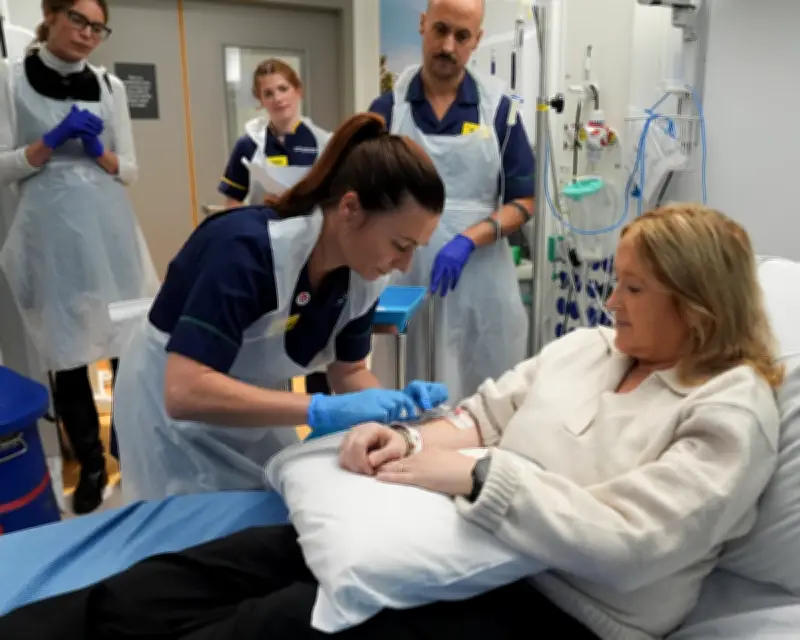
A pioneering trial on the NHS has seen lupus patients achieve remission after receiving genetically modified T-cell therapy, marking a potential breakthrough in treating the autoimmune disease. The treatment, known as CAR-T therapy, involves reprogramming a patient's own immune cells to target and destroy faulty B cells that cause lupus.
Trial Results Show Promise
The early-stage trial, conducted at University College London Hospitals NHS Foundation Trust (UCLH), included five patients with severe lupus that had not responded to conventional treatments. All five patients showed significant improvement, with four achieving complete remission and one having a partial response. The findings were published in the journal Nature Medicine.
How CAR-T Therapy Works
CAR-T therapy, already used for some blood cancers, involves taking T cells from a patient's blood and genetically engineering them in a lab to recognize and attack specific cells. In this case, the engineered T cells target CD19, a protein on the surface of B cells. After infusion, the modified cells multiply and eliminate the rogue B cells driving lupus.

Dr. Maria Leandro, a rheumatologist at UCLH and lead author of the study, said: "This is a very exciting development. We have seen dramatic improvements in patients who were very sick and had exhausted other treatment options."
Patient Experiences
One of the trial participants, 32-year-old Sarah Johnson from London, had lived with lupus for over a decade, suffering from severe joint pain, fatigue, and kidney problems. Within weeks of treatment, her symptoms began to fade. "It feels like a miracle," she said. "I can now plan for the future without being held back by my disease."
Implications for Lupus Treatment
Lupus is a chronic autoimmune condition where the immune system attacks healthy tissues, causing inflammation and damage to organs such as the skin, joints, kidneys, and brain. It affects about 50,000 people in the UK, predominantly women. Current treatments include steroids and immunosuppressants, which can have significant side effects and are not always effective.
Professor Mark Lowdell, director of cellular therapy at UCL, noted: "This approach could transform the management of lupus. The remissions we have seen are unprecedented in such severe cases."
Next Steps
While the results are promising, the trial is small and longer-term follow-up is needed to assess durability and safety. A larger phase 2 trial is planned to confirm the findings and explore the therapy's potential for other autoimmune diseases like rheumatoid arthritis and multiple sclerosis.
The NHS is closely monitoring the outcomes, with hopes that CAR-T therapy could become a standard treatment for lupus if further trials succeed. The therapy is expensive, but its potential to induce long-term remission could reduce the need for lifelong medications and hospitalizations.
Dr. Leandro added: "We are cautiously optimistic. This is not a cure for everyone, but for some patients, it could be life-changing."